The program includes structural reforms designed to improve the governance of state-owned enterprises, remove barriers to private investment, promote fair competition, strengthen domestic revenue collection, and reduce government financing costs.
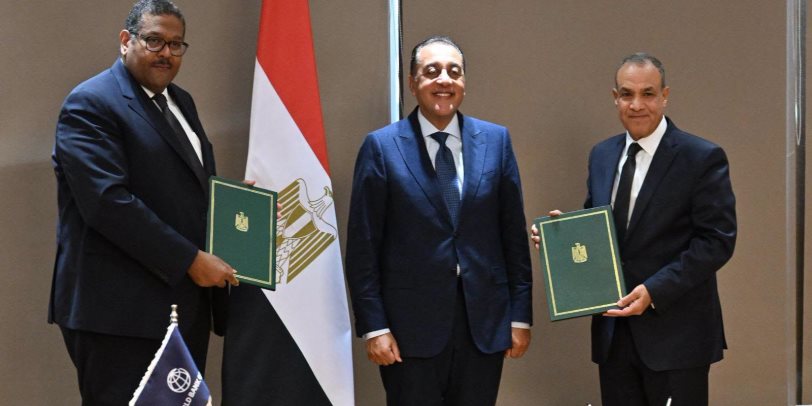
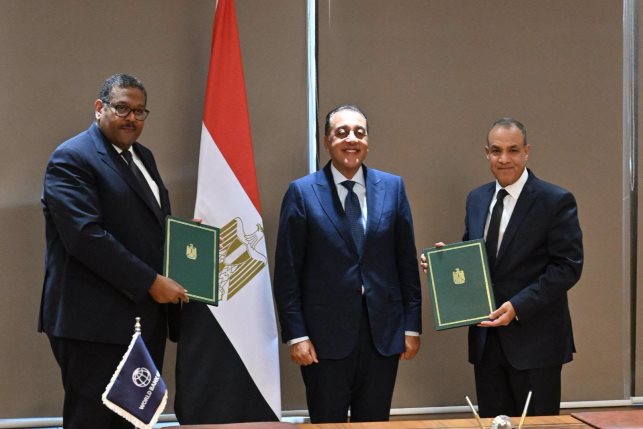
Prime Minister Mostafa Madbouly witnessed the signing of a $1 billion financing agreement with the World Bank on Sunday, November 1, under the second phase of the Development Policy Financing (DPF) program, aimed at strengthening economic resilience, boosting private sector investment, and accelerating the country's green transition.
The financing falls under the second phase of the World Bank's Generating Resilience, Opportunities, and Welfare for a Thriving Egypt program, which seeks to enhance economic competitiveness, improve the business environment, strengthen fiscal resilience, and support sustainable growth.
The program includes structural reforms designed to improve the governance of state-owned enterprises, remove barriers to private investment, promote fair competition, strengthen domestic revenue collection, and reduce government financing costs.
The second phase also introduces social, economic, and environmental reforms, including expanding coverage under Egypt's Takaful and Karama social protection programs, improving greenhouse gas emissions monitoring, developing carbon credit markets, and strengthening the financial sustainability of the electricity and water sectors.
The signing ceremony took place at the Ministry of Foreign Affairs headquarters in the New Administrative Capital, attended by Minister of Planning and Economic Development Ahmed Rostom and Deputy Finance Minister for Fiscal Policies Yasser Sobhy.
The agreement was signed by Foreign Minister Badr Abdelatty, who also serves as Egypt's Governor at the World Bank, and Alwaleed Alatabani, the World Bank's Division Director for Egypt, Yemen, and Djibouti
These measures are intended to support Egypt's transition toward a greener economy while improving its ability to withstand external economic shocks and climate-related challenges.
The World Bank Group approved the $1 billion financing package on May 8, 2026, as the second operation in a three-phase development financing program. The package includes $800 million in World Bank financing backed by a $200 million credit guarantee from the United Kingdom.
The financing aligns with the World Bank Group's Country Partnership Framework for Egypt for fiscal years 2023–2027, supporting private sector-led job creation, economic stability, and sustainable development.
Egyptian officials said the agreement reflects continued cooperation with international financial institutions and supports the country's economic reform agenda, including the State Ownership Policy, the government privatization program, Egypt Vision 2030, and the National Climate Change Strategy 2050.
On the sidelines of the ceremony, Madbouly reviewed historical documents from the Foreign Ministry's archives highlighting Egypt's longstanding partnership with the World Bank.
These included Egypt's signed founding agreement with the institution, the first bilateral agreement between Egypt and the World Bank in 1959, and a document relating to the reopening of the Suez Canal.
The agreement marks another step in Egypt's efforts to secure development financing, advance structural reforms, and promote sustainable and inclusive economic growth.