The agreement was signed on the sidelines of the annual conference of the Arab Federation of Capital Markets in Abu Dhabi.
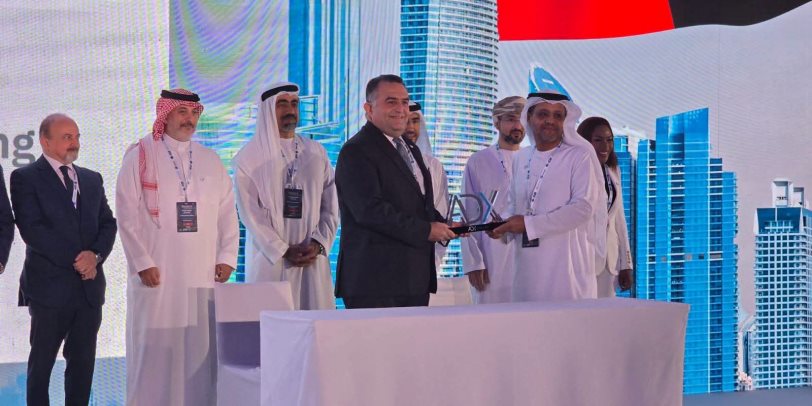
The Egyptian Exchange (EGX) and the Abu Dhabi Securities Exchange (ADX) have signed a strategic memorandum of understanding aimed at strengthening cooperation between the two markets and advancing financial services in Egypt and the UAE, supporting the interests of investors and listed companies in both countries.
The agreement was signed on the sidelines of the annual conference of the Arab Federation of Capital Markets in Abu Dhabi. EGX was represented by its Chairman Omar Radwan, while ADX was represented by Abdulla Alnuaimi, Group Chief Executive Officer of the Abu Dhabi Securities Exchange.
Radwan said the MoU is designed to expand regional and international cooperation and partnerships, while creating a more attractive business environment for major and institutional investments in Egypt. He described the agreement as a strategic step aligned with EGX’s efforts to strengthen ties with leading financial markets.
He added that positive market performance, alongside improved liquidity and trading activity in Egypt, provides a strong foundation for expanding cross-border partnerships, enhancing market efficiency and attracting new segments of international investors.
Radwan said EGX is working to strengthen its position as a regional investment destination by diversifying investment instruments and developing digital solutions that facilitate capital flows. Cooperation with Arab exchanges, he added, is a key pillar in promoting greater market integration and expanding growth opportunities for companies and investors.
These efforts complement recent legislative and regulatory developments in Egypt’s capital market, including enhancements to margin trading and securities borrowing for short selling, the introduction of trading in bonds and Treasury bills, and the development of derivatives and futures markets as well as carbon certificate platforms. New tax incentives have also been introduced.
According to Radwan, these instruments provide investors with broader options for risk management and hedging, while helping deepen the market and strengthen its international competitiveness.
Under the MoU, the two exchanges will explore mechanisms to facilitate cross-border trading and establish channels that provide investors with direct access to both markets. The agreement also covers potential mutual recognition of member brokerage firms and the use of digital solutions, including the Tabadul platform, to enable trading and remote membership in accordance with applicable regulatory frameworks.
The two sides will also examine joint technical and regulatory frameworks to support dual listings of companies and investment instruments on the Egyptian and UAE markets. The initiative is expected to broaden the institutional investor base and increase liquidity available to issuers.
Cooperation will also include strengthening technological connectivity between the two markets to facilitate the movement of securities in line with financial security standards, while leveraging fintech solutions to modernize trading infrastructure.
The agreement further provides for the exchange of market data to support the development of new investment products and financial instruments tailored to the needs of institutions and international investment funds.
It also covers the exchange of operational and research expertise, professional capacity building, and joint initiatives to enhance investment awareness and promote opportunities and products available across both markets.
On the sidelines of the conference, Radwan participated in a panel discussion titled “Markets Under Pressure,” where he addressed EGX’s ability to navigate geopolitical shocks.
He said trading values on the Egyptian market reached EGP 17.9 trillion from the beginning of 2026 through September, while market capitalization exceeded EGP 4 trillion.
Radwan added that the ability of foreign investors to enter and exit the market and repatriate investment returns supports international funds’ confidence in Egypt. He also pointed to Egypt’s classification as an emerging market by global index providers including MSCI, S&P Dow Jones Indices and FTSE Russell as reflecting ongoing efforts to develop the country’s capital market.