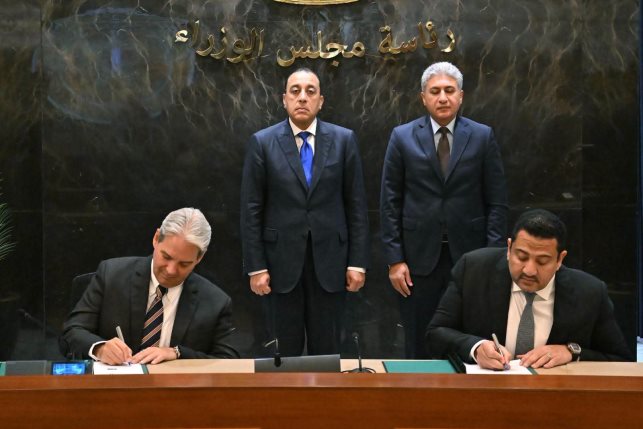
The meeting, attended by Prime Minister Mostafa Madbouly and other senior officials, reviewed the government’s plans to develop Egyptian airports, expand air transport capacity, upgrade infrastructure and modernize the fleets of national airlines.

Egypt’s civil aviation sector generated $4.8 billion in fiscal year 2025/2026, while the government invested more than $400 million in modernizing the country’s airspace infrastructure, Civil Aviation Minister Sameh El-Hefny said during a meeting with President Abdel Fattah El-Sisi on Thursday.
The meeting, attended by Prime Minister Mostafa Madbouly and other senior officials, reviewed the government’s plans to develop Egyptian airports, expand air transport capacity, upgrade infrastructure and modernize the fleets of national airlines.
El-Hefny said the government’s investments in airspace modernization included upgrading radar systems, satellite networks and communications infrastructure, as part of broader efforts to improve operational efficiency and strengthen the aviation sector’s contribution to foreign currency revenues.
El-Sisi stressed the importance of continuing to modernize airports’ digital infrastructure and adopting advanced technologies to streamline travel procedures, improve passenger experience and raise service standards in line with international practices.
The meeting also reviewed progress on Terminal 4 at Cairo International Airport, a major development project aimed at strengthening the airport’s position as a regional and international aviation hub.
According to presidential spokesperson Mohamed El-Shennawy, the project forms part of a broader expansion plan to increase Cairo International Airport’s annual passenger capacity to 70 million in its first phase, with a long-term target of 110 million passengers after 2041.
El-Sisi directed that the new terminal incorporate advanced technologies, including artificial intelligence and digital systems, while meeting international standards for environmental sustainability, resource efficiency and airport operations.
The government is also moving forward with development projects at Alamein, Sphinx and New Administrative Capital airports, which are expected to add approximately 12 million passengers annually to Egypt’s airport capacity.
El-Hefny said preparations were nearing completion to launch the tender process for Hurghada International Airport as a pilot project for private sector participation in the management, operation and development of Egyptian airports.
He emphasized that Egyptian airports remain state-owned sovereign assets and are not being offered for sale. Instead, private sector participation is intended to attract foreign direct investment, introduce advanced technologies and benefit from international operational expertise.
The president also called for accelerating the implementation of directives issued during Egypt Forum 2026 to improve aviation policies, regulations and incentives.
These measures aim to stimulate inbound tourism, expand air connectivity with international markets and encourage greater participation by private airlines, with a target of increasing their share of tourist air transport to 30%.