Madbouly said the forum aims to foster constructive dialogue on Egypt's current challenges and future prospects while highlighting achievements across various sectors over the past 12 years, despite the unprecedented domestic and global challenges faced during this period.
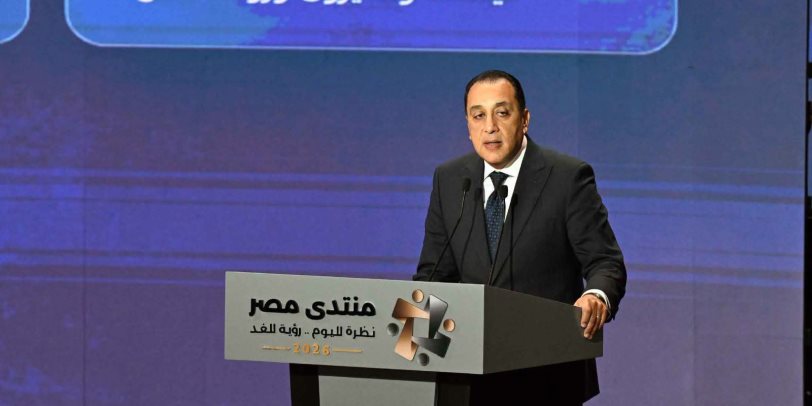
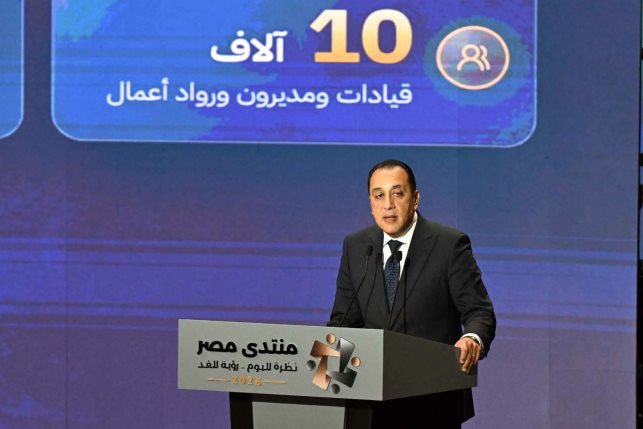
Prime Minister Mostafa Madbouly delivered a speech at the opening session of the Egypt 2026 Forum, held under the theme “A Look at Today... A Vision for Tomorrow,” outlining the government's plans to engage citizens in shaping national priorities and development strategies through 2030.
Madbouly said the forum aims to foster constructive dialogue on Egypt's current challenges and future prospects while highlighting achievements across various sectors over the past 12 years, despite the unprecedented domestic and global challenges faced during this period.
He emphasized that the forum is not merely a platform to showcase development achievements but also an opportunity to address citizens' concerns, criticisms, and proposals.
"This is not a one-way dialogue, but a two-way conversation," Madbouly said, stressing that the government is committed to listening to citizens and responding to their priorities.
The prime minister explained that the forum's agenda was developed using a research-based approach to identify public concerns and priorities.
Over the past 15 days, surveys were conducted among citizens, young people, investors, and private sector representatives to assess the most pressing issues and levels of satisfaction with public services.
Additionally, more than 450 citizens participated in listening sessions at the National Training Academy, submitting approximately 150 ideas and proposals.
More than 4,000 academics and researchers also contributed to 30 preparatory sessions held across 28 Egyptian universities, while 16 think tanks participated in 13 preparatory discussions organized by the Cabinet's Information and Decision Support Center.
Madbouly highlighted the significant public engagement recorded through the forum's website, which has attracted approximately 17 million views and more than 61,000 registered participants, who have submitted over 16,000 ideas and proposals.
He added that 50% of participants are between the ages of 18 and 35, reflecting strong engagement among younger generations.
Addressing citizens' priorities
According to Madbouly, public participation has helped identify more than 42 key questions that government ministers and officials will address transparently during the forum's sessions.
These questions cover major national issues, including the economic value of national megaprojects, investment in the New Administrative Capital and road networks compared with healthcare and education, and the country's economic strategy following the completion of its International Monetary Fund (IMF) program.
Other priorities include public debt management and Egypt's response to regional and international economic challenges.
Madbouly stressed that the forum represents an opportunity to objectively evaluate Egypt's development experience, assess achievements and challenges, and establish priorities for the next phase.
He noted that the period through 2030 requires a shift from broad ambitions and general visions toward clearly defined targets and detailed implementation plans.
The government, he explained, must identify specific objectives for the next three years and outline the measures needed to achieve them, allowing progress to be monitored and outcomes to be evaluated.
The prime minister also revealed that surveys and public consultations identified five major concerns shared by approximately 70% of respondents: education, prices and inflation control, healthcare services, wages and pensions, and maintaining security and stability.
Citizens also expressed interest in cultural development, media, national identity, labor market conditions, youth and sports, and information and communications technology.
Madbouly emphasized that young people remain central to Egypt's future, a priority reflected in the forum's agenda and discussion topics.
Forum agenda and key discussion areas
The forum's agenda is organized around four main themes, with each focusing on a different aspect of national development and citizens' well-being.
Day one: Human development
The first theme focuses on education, youth, creativity, culture, and social values through three plenary sessions and parallel workshops.
Discussions will explore how Egypt can build on investments in educational infrastructure and services to expand opportunities, improve educational outcomes, and develop a generation capable of continuous learning and innovation.
Day two: Integrated development and quality of life
The second theme addresses urban development, healthcare, digital transformation, and the modernization of government services.
Through three plenary sessions, participants will examine ways to maximize the benefits of national development projects and strengthen their direct impact on citizens' daily lives.
Discussions will also focus on improving the efficiency, accessibility, and quality of public services.
Third theme: Social protection and security
This theme covers public safety, social protection systems, and food and water security.
Sessions will examine current challenges and future strategies, with particular attention to strengthening mechanisms that protect citizens against economic and social pressures.
Fourth theme: Economy and energy
The economic discussions will focus on investment, industrial development, sustainable employment opportunities, and the government's proposed national economic transformation program for the period following its IMF arrangement.
Other key topics include strategies to increase foreign currency resources, manage public debt, and address energy-related challenges.
Madbouly explained that the government's objective is to move beyond economic stabilization toward a more productive and competitive growth model driven by the private sector.
He stressed that stronger economic performance must translate into sustainable job creation, higher incomes, and improved living standards.
Friday session dedicated to citizens
The forum will dedicate Friday's discussions to citizens, giving them an opportunity to raise issues directly affecting their lives.
Topics will include rising prices, the legalization of building violations, tree-planting initiatives, regulation of the real estate market, and concerns facing Egyptians living abroad.
The session will also address emerging social issues, including the management of stray dogs.
Turning dialogue into measurable action
Concluding his remarks, Madbouly emphasized that the forum's ultimate objective goes beyond producing recommendations.
Instead, it seeks to establish clear national priorities, practical solutions, and measurable implementation targets, with responsibilities assigned to the relevant government entities.
He added that the government intends to develop performance indicators to track progress and ensure accountability.
The outcomes of the forum are expected to contribute to a comprehensive national action plan covering the four years through 2030, aimed at addressing current challenges and delivering tangible improvements in citizens' living standards.