
It stressed that the proposal represents the individual’s personal view and does not reflect any policy or plan under consideration by the Egyptian government.
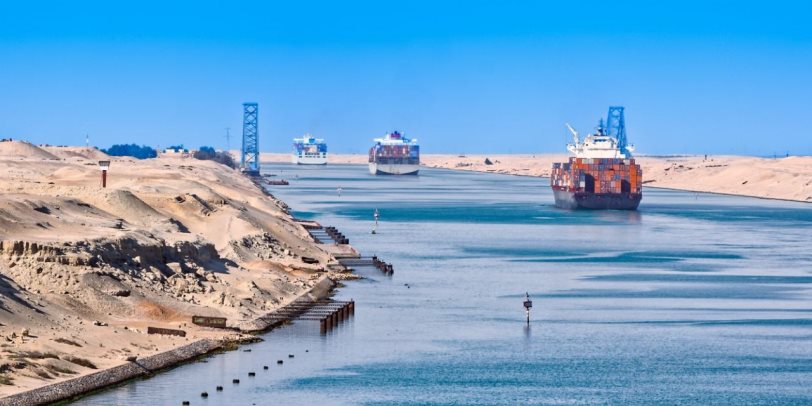
Egyptian Cabinet has denied reports circulating in recent hours claiming that the government is considering transferring ownership of certain state-owned assets, including the Suez Canal, to the Central Bank of Egypt in exchange for settling part of the government’s domestic debt.
In a statement, the Cabinet clarified that the reports were based on a proposal put forward by a public figure. It stressed that the proposal represents the individual’s personal view and does not reflect any policy or plan under consideration by the Egyptian government.
The Cabinet noted that ideas involving the exchange of public assets for domestic debt had previously been studied and assessed by the relevant state authorities as part of efforts to explore different options for managing and reducing public debt and its servicing costs.
However, those assessments concluded that the proposal was not suitable for implementation. Accordingly, it has not been included among the government’s policies or mechanisms for managing public debt.
The Cabinet explained that evaluating such proposals requires careful consideration of several economic, financial, and institutional factors. Chief among them is the fact that transferring assets and liabilities between state entities does not, in itself, reduce the state’s overall obligations.
Addressing public debt requires an integrated approach that takes into account the structure of the debt, its servicing costs, domestic liquidity, and the potential impact on monetary and fiscal policy. It must also ensure the efficient management of public assets and the sustainable maximization of their economic returns.
The Cabinet categorically stressed that the Suez Canal is not subject to any such proposal and that the government has no intention of exchanging, mortgaging, or transferring its ownership in return for debt settlement.
It emphasized that the Suez Canal is a strategic public utility with a unique status, directly linked to Egypt’s national security and sovereignty, in addition to its central role in the national economy and global trade.
In a related context, the Cabinet explained that the recent settlement of the National Media Authority’s historical debts to the National Investment Bank was a financial and institutional resolution of a specific case, based on its particular legal and financial circumstances and the nature of the assets and liabilities between the two entities.
It stressed that this case should not be used as a precedent or treated as a general model for managing the state’s public debt.
The Cabinet said the government is pursuing a comprehensive strategy to manage and reduce public debt. This includes improving fiscal indicators, achieving sustainable primary surpluses, increasing state revenues, and enhancing the efficiency of public spending.
The strategy also seeks to extend debt maturities and lower servicing costs, while maximizing returns from state-owned assets through the State Ownership Policy, public offering programs, and partnerships with the private sector.
The Cabinet stressed that these policies are implemented within clear and transparent frameworks aimed at securing the highest possible return for the Egyptian economy while safeguarding the rights of the state and future generations.
Concluding its statement, the Cabinet reaffirmed the government’s commitment to allowing experts and public figures to present a range of economic views and proposals. However, it emphasized the importance of distinguishing personal opinions from the state’s official policies and positions, which are announced exclusively through the Cabinet’s official channels and the relevant government authorities.