The country also ranks first in the region for attracting investment into ICT start-ups, according to a statement by Minister of Communications and Information Technology Amr Talaat.
Egypt’s ICT sector is on a fast growth track, with 74 outsourcing companies pledging to employ 60,000 specialists between 2022 and 2024, more than 260 outsourcing centers now operating nationwide (including 190 run by global firms), and a rising 83 companies in electronics design, targeted to expand to 120 by 2028.
The country also ranks first in the region for attracting investment into ICT start-ups, according to a statement by Minister of Communications and Information Technology Amr Talaat.
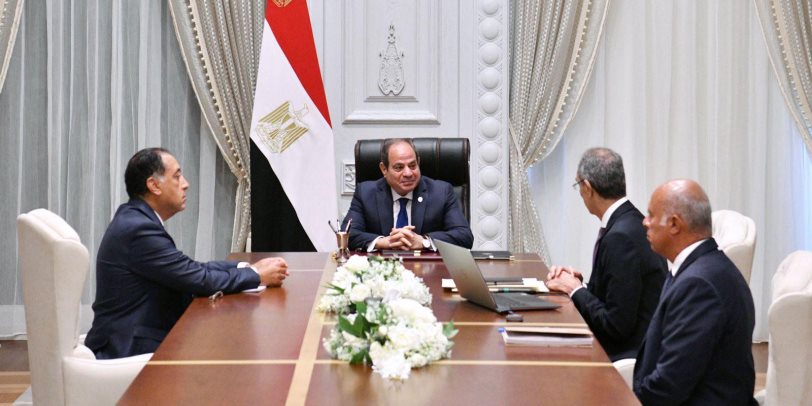
These figures were presented during a meeting chaired by President Abdel Fattah El-Sisi, attended by Prime Minister Mostafa Madbouly, and Minister of Interior Mahmoud Tawfik.
According to Presidential Spokesman Ambassador Mohamed El-Shenawy, President El-Sisi reviewed a comprehensive report on plans to upgrade Egypt’s telecommunications networks to enhance efficiency, expand coverage, and provide high-quality services nationwide.
The President directed the continuation of network support, wider coverage, and maximum utilization of modern technologies, particularly fifth-generation (5G) capabilities.
In the follow-up session, Minister Talaat outlined the ministry’s achievements in outsourcing, electronics design, and start-up investment attraction. He emphasized Egypt’s regional leadership in drawing international tech investments.
President El-Sisi affirmed the state’s full support for the ICT sector, stressing the importance of launching initiatives and establishing specialized centers to prepare qualified cadres, with transparent selection and high-level training.
He also instructed the development of clear, actionable strategies for artificial intelligence, focusing on research, development, training, and optimal resource utilization.