These events, though distinct in their objectives, are intricately linked by Egypt's strategic positioning and its commitment to fostering peace and stability in the Middle East.
In October 2025, two pivotal summits unfolded in Egypt, each marking a significant stride in regional and international diplomacy.
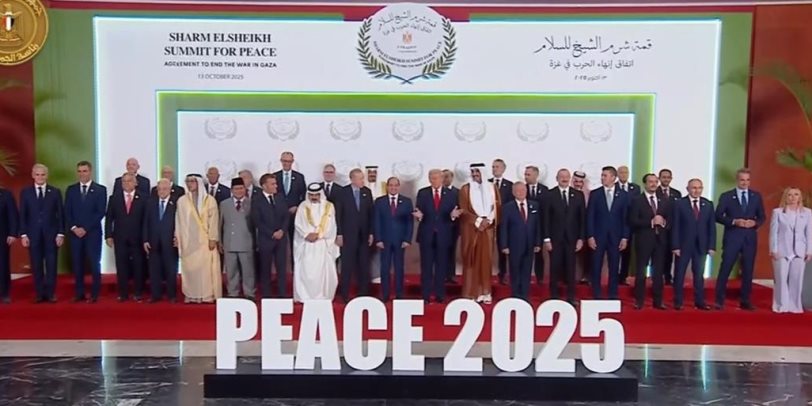
The Sharm El-Sheikh Peace Summit, held on October 13, brought together over 20 world leaders to address the ongoing Gaza conflict, while the EU-Egypt Summit in Brussels on October 22 focused on strengthening bilateral ties between Egypt and the European Union.
These events, though distinct in their objectives, are intricately linked by Egypt's strategic positioning and its commitment to fostering peace and stability in the Middle East.
By hosting the Peace Summit in Sharm El-Sheikh, Egypt affirmed its pivotal role in promoting dialogue and preventing further bloodshed, not only in Gaza but across a Middle East that stood on the brink of turmoil.
In doing so, Egypt earned widespread international recognition and praise for its unwavering commitment to stability, diplomacy, and the pursuit of lasting peace.
Then came the EU-Egypt Summit, a pivotal milestone marking the launch of a broad partnership with the European Union and laying the foundation for a new era of cooperation.
The summit reaffirmed Egypt’s ability, under the leadership of President Abdel Fattah El-Sisi, to build balanced, strategic partnerships with Europe, grounded in mutual respect, shared interests, and a common vision for regional stability and development.
Sharm El-Sheikh Peace Summit: A Turning Point for Gaza
Co-chaired by Egyptian President Abdel Fattah El-Sisi and former U.S. President Donald Trump, the Sharm El-Sheikh Peace Summit aimed to solidify a ceasefire agreement between Israel and Hamas, marking the first phase of a comprehensive peace plan.
The summit underscored Egypt's pivotal role as a mediator in the region, with President El-Sisi emphasizing that the U.S. proposal represented the last chance for peace in the Middle East
Leaders from nations including Qatar, Turkey, France, and the United Kingdom attended the summit, signaling a unified international stance on the need for a sustainable resolution to the Gaza conflict.
The summit's outcomes included the establishment of a technocratic administration to oversee Gaza's reconstruction and the initiation of humanitarian aid efforts.
“The Sharm El-Sheikh Peace Summit has laid the foundation for a global consultation mechanism shaped by an Egyptian vision, aimed at ending the ongoing war in Gaza since the events of October 7, 2023. This mechanism, endorsed by all major international powers, including the United States, reflects broad consensus on the need for a ceasefire between Hamas and Israel, the delivery of humanitarian aid to Palestinians, the exchange of hostages, and the reconstruction of Gaza,” Mohamed Maged Buheiry, Political Science Analyst & Expert in Crisis Management, said in an interview with Business Today Egypt.
Buheiry added that despite multiple international efforts to mediate the crisis, Egypt has successfully asserted its leadership, achieving its objectives, solidifying its diplomatic stance, and setting forth a clear strategic framework for regional peace.
He added that the Egyptian leadership has acted decisively to block any attempts to displace Palestinians from Gaza or pressure Egypt to accept their resettlement in Sinai, a scenario that would effectively dissolve the Palestinian cause.
According to Buheiry, through the Peace Summit, Egypt sought to send a series of strategic messages to the international community:
1. To reaffirm its central and pivotal role in the Palestinian issue, emphasizing its political and security vision.
2. To demonstrate its ability to navigate and influence complex regional crises, offering pragmatic and sustainable solutions.
3. To underscore that peace and stability in the Middle East can only be achieved through a two-state solution.
4. To declare Egypt’s rejection of Israel’s attempts to impose unilateral realities on the ground, and to call for a firm stand against its expansionist behavior.
“Egypt’s value as a mediator functions as a strategic asset—one shaped by the state’s ability to leverage its historical and geographic advantages, its experienced diplomatic and security channels, and the level of international trust it commands during major crises,” according to a statement by Mohamed El-Sanousi, International Political Economy Expert in an interview with Business Today Egypt.
El-Sanousi added that the recent Sharm El-Sheikh Summit underscored this, demonstrating Cairo’s unique capacity to bring all parties together at a moment when no viable alternative existed for international actors seeking a platform to manage rising tensions.
He added that yet maintaining international confidence is complex, as Egypt’s role is tied not only to political considerations but also to its ability to handle interconnected humanitarian, security, and economic issues. The summit therefore revived Egypt’s position as an indispensable mediator, while simultaneously placing it before the challenge of converting this renewed diplomatic presence into durable strategic gains.
EU-Egypt Summit
Nine days later, Cairo shifted its diplomatic lens toward Europe, hosting the EU-Egypt Summit, a milestone event aimed at deepening strategic cooperation between Egypt and the European Union.
President Abdel Fattah El-Sisi took part in the first Egypt–European Union Summit, held at the European Council headquarters in Brussels, Belgium, marking a significant milestone in strengthening the strategic and comprehensive partnership between Egypt and the European Union.
The summit marked a historic moment in EU–Egypt relations, yielding a series of transformative agreements.
On the sidelines, both parties signed a Memorandum of Understanding on Macro-Financial Assistance worth €4 billion, aimed at supporting Egypt’s economic resilience.
They also finalized a €75 million agreement to fund the EU Support Program for the Implementation of Social and Economic Reforms at the Local Level, alongside Egypt’s accession to the Horizon Europe program, the EU’s €175 billion research and innovation initiative.
Further, the European Union announced €110.5 million in new funding for 2025, directed toward sustainable development, skills training, and economic governance, as well as €50 million to accelerate Egypt’s green transition and low-carbon initiatives.
The summit also activated major EU-funded migration projects under the €200 million migration component of the Strategic and Comprehensive Partnership, with implementation beginning in 2025–2026.
“The new European financing package will strengthen Egypt’s short-term financial stability by supporting reserves and easing debt pressures, giving the government more space to manage inflation and currency fluctuations. However, its impact will remain limited without parallel structural reforms,” Mohamed El-Sanousi said.
According to International Expert El-Sanousi, in the medium term, the package can stimulate private investment, especially in renewable energy and infrastructure, by reducing economic and political risks, provided Egypt maintains consistent fiscal and monetary policies.
“Over the long term, it can support structural transformation through better governance, stronger skills, and higher productivity. Yet the benefits will likely appear faster in advanced sectors than in traditional ones, leading to uneven growth across the economy,” He added.
A Shared Vision for Sustainability and Prosperity
Beyond the financial commitments, the summit produced a unified vision for the future.
Both sides agreed to intensify cooperation on green transition and energy, launching a joint analytical study to explore policy tools such as carbon pricing and to develop a trade strategy aligned with climate goals.
They also emphasized the blue economy, promoting the sustainable use of marine resources to stimulate growth while protecting the environment.
In trade and investment, Egypt and the EU agreed to advance discussions on a Sustainable Investment Facilitation Agreement (SIFA) to modernize bilateral relations. Egypt joined as a co-sponsor of the Investment Facilitation for Development Agreement within the World Trade Organization, reinforcing its global economic engagement.
The two parties also pledged to review the outcomes of the 2024 EU–Egypt Investment Conference, focusing on progress in clean technology and renewable energy, and to organize a joint investor roundtable in 2026 to further enhance private-sector collaboration.
On migration and mobility, both sides reaffirmed their commitment to managing migration effectively and humanely, while enhancing legal pathways and cooperation against human smuggling within the framework of their Strategic Partnership.
Connecting the Two Summits
The Sharm El-Sheikh and EU-Egypt Summits were bound by a common theme: the pursuit of stability through partnership.
The first demonstrated Egypt’s diplomatic influence in managing regional conflicts, while the second showcased its ability to translate political capital into economic growth and international cooperation.
Together, they reflected a single vision. that peace and development are inseparable, and that diplomacy must serve both humanitarian and strategic ends.
Egypt’s leadership across these two events also highlighted a new form of international synergy.
Its role as a mediator in Gaza lent it credibility as a partner in Europe’s broader strategy for the Mediterranean, while its cooperation with the EU provided the resources and alliances needed to sustain long-term peace efforts in the region.
Cairo thus positioned itself as a hinge between global initiatives for security, development, and climate resilience.
“Egypt’s success in the Sharm El-Sheikh Peace Summit was a key driver of Europe’s renewed confidence in investing in the country. The summit reshaped Egypt’s diplomatic and economic image, signaling that its stability is essential for regional, and European, security,” El-Sanousi added.
He confirmed that this political breakthrough reduced investor risk, reassured European leaders, and provided the political cover needed to justify major financial commitments to green transition and infrastructure projects.
By lowering uncertainty and demonstrating effective crisis management, the summit sent clear signals to private investors that Egypt offers a stable environment for long-term investment, El-Sanousi said.
Ultimately, it acted as the catalyst that turned political stability into real economic opportunity, laying the groundwork for stronger, sustainable investment flows in the medium term, He added.
Adding to this momentum, the month also saw S&P Global upgrade Egypt’s sovereign credit rating to “B” from “B-”, with a stable outlook.
The agency, as reported by Reuters, cited Egypt’s progress in fiscal consolidation, macroeconomic stability, and access to external financing, a move widely seen as a vote of confidence in the country’s ongoing structural reforms and sustained economic recovery.
Taken together, these developments turned October 2025 into a defining chapter in Egypt’s modern diplomacy,a moment where fiscal credibility, peace efforts, and international cooperation converged.
“The Sharm El-Sheikh Peace Summit and the Egypt–EU Summit in Brussels reaffirmed Egypt’s influential position globally across political, economic, and security spheres. They reflect the international community’s trust in Egypt’s leadership and balanced vision on regional and global issues,” Buheiry said.
He confirmed that these outcomes are the result of Egypt’s steady diplomacy and proactive role in resolving crises while driving development. Today, Egypt is redefining regional dynamics and asserting itself as a pillar of stability and constructive dialogue on the world stage.