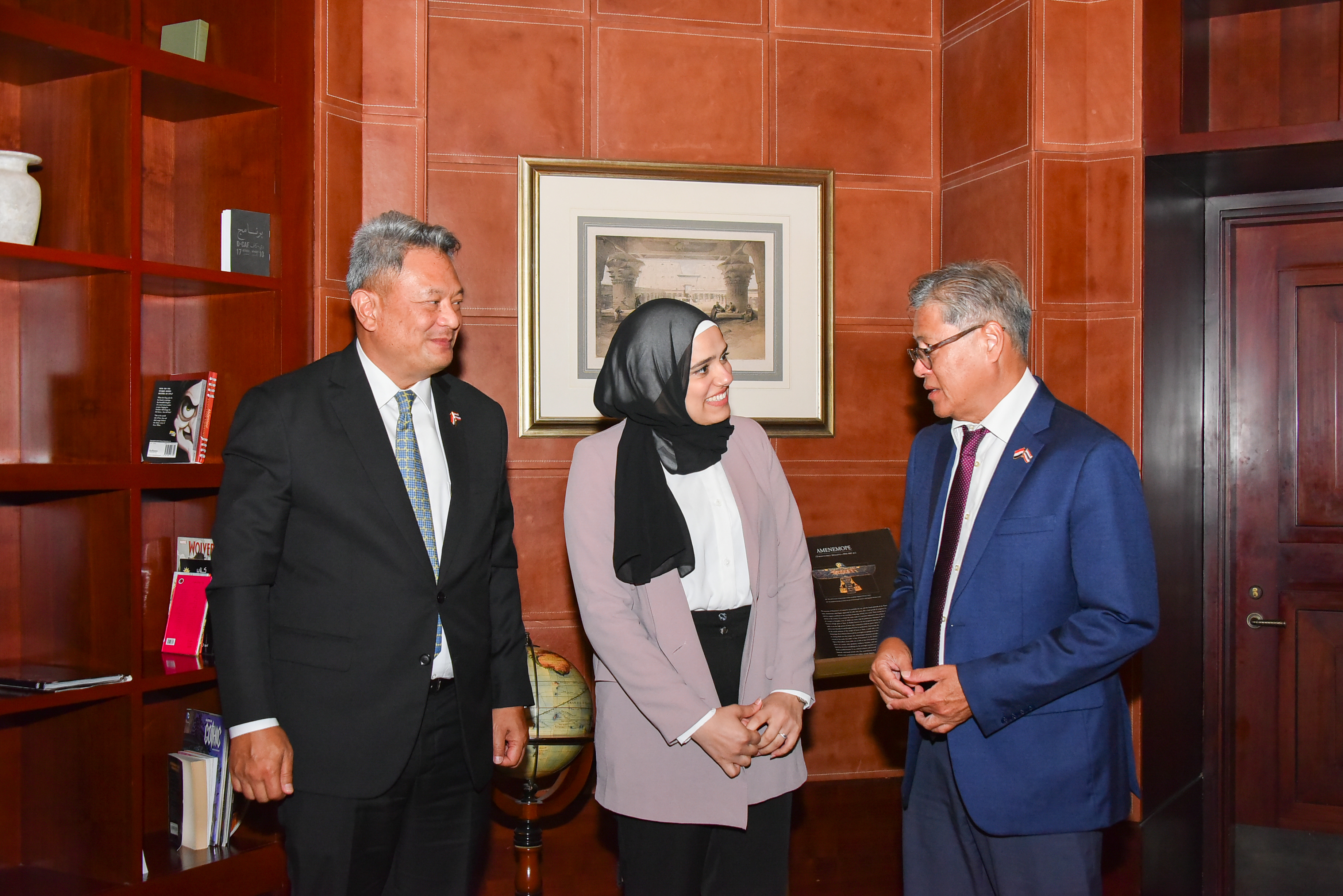
In an exclusive interview with Business Today Egypt, Thailand’s Vice Minister For Foreign Affairs Russ Jalichandra emphasized that while political ties remain strong, both nations are now prioritizing economic collaboration—particularly on trade, investment, green energy, and food security.
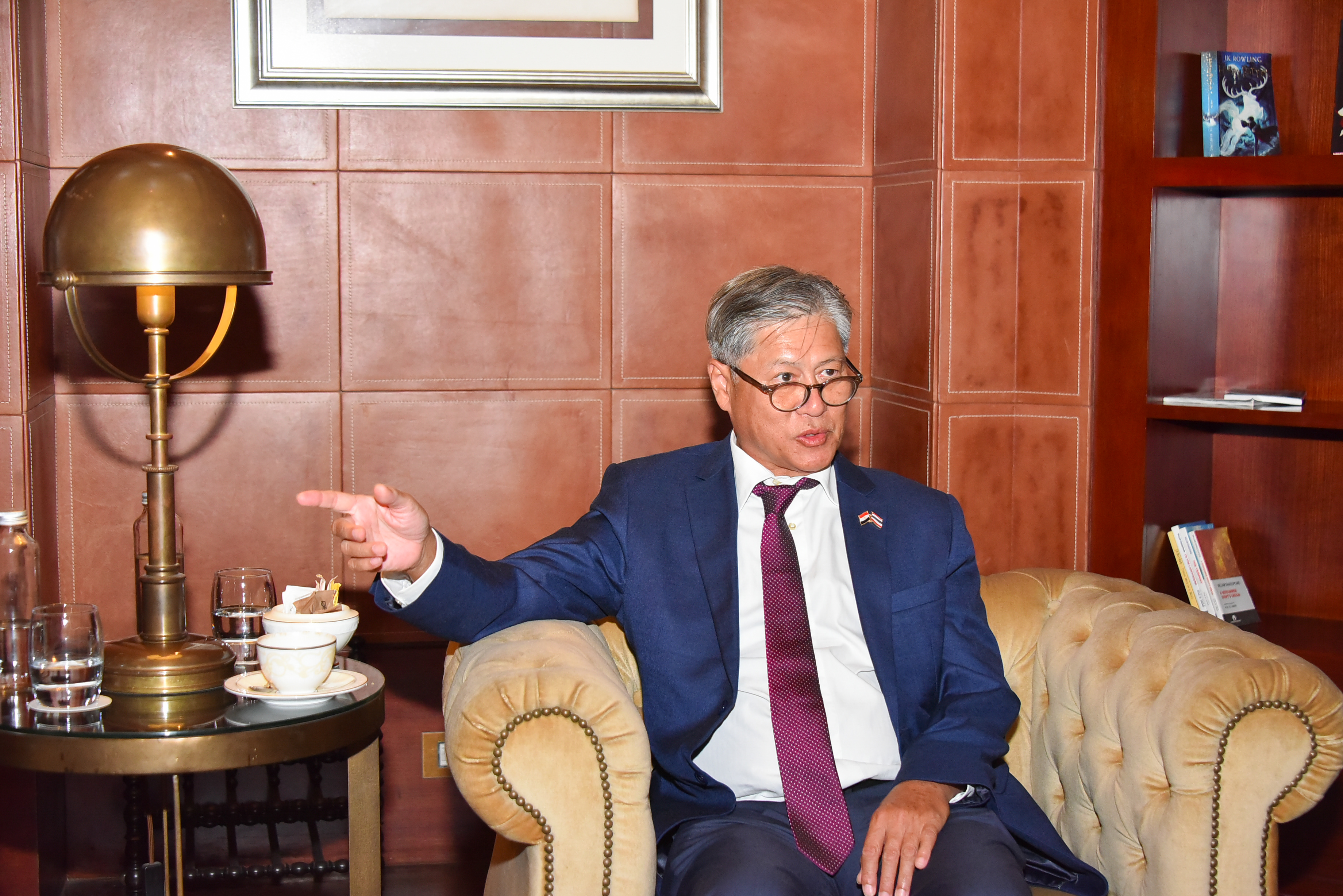
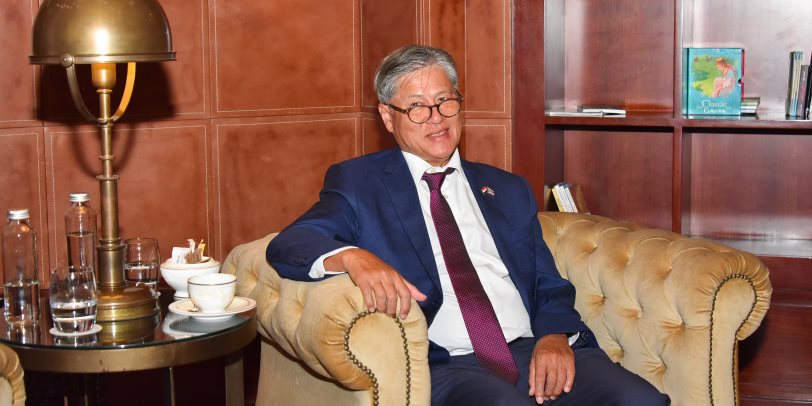 Thailand’s Vice Minister For Foreign Affairs, Russ Jalichandra
During the seventh round of political consultations held in Cairo, Egypt and Thailand reaffirmed their long-standing diplomatic partnership while charting a path for deeper strategic cooperation.
In an exclusive interview with Business Today Egypt, Thailand’s Vice Minister For Foreign Affairs Russ Jalichandra emphasized that while political ties remain strong, both nations are now prioritizing economic collaboration—particularly on trade, investment, green energy, and food security.
Jalichandra expressed Thailand’s interest in collaboration in the tourism sector, noting that he was keen to tour the Grand Egyptian Museum, Saqqara, and the National Museum of Egyptian Civilization, which he described as impressive. This is Jalichandra’s third visit to Egypt, with the second one having taken place in 2024.
The key outcomes of Jalichandra’s visit include plans to host a Joint Commission meeting later this year, finalize several pending MoUs, and strengthen bilateral engagement across security, education, and cultural exchange when Egyptian Foreign Minister Badr Abdelatty visits Thailand. With trade volume nearing $700 million, the two countries are leveraging their shared values and geographic strengths to boost connectivity across Africa, the Mediterranean, and Asia.
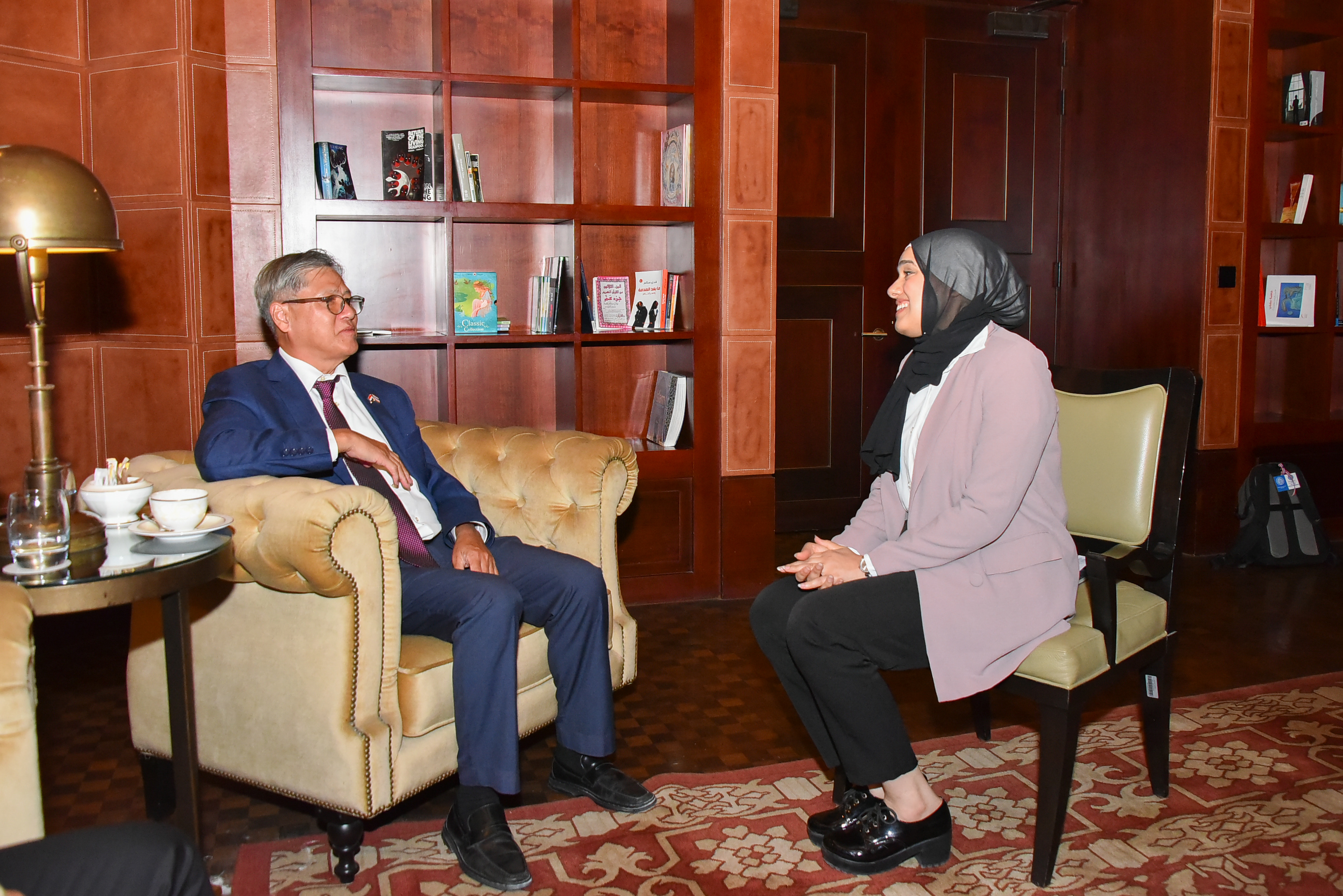
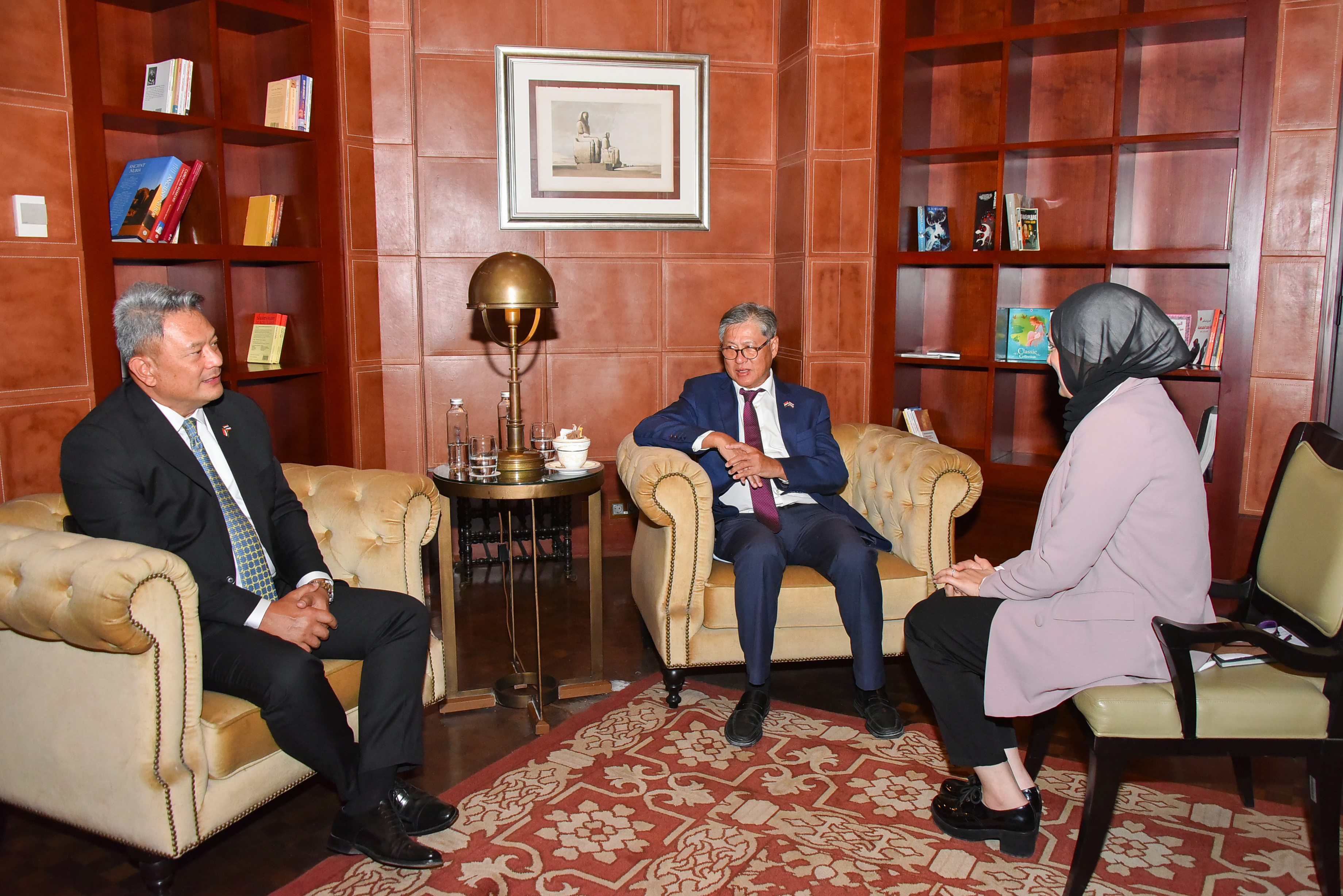
Here is the full interview, conducted in the presence of Ambassador of the Kingdom of Thailand to Egypt, Thanawat Sirikul.
Q: What are the key takeaways from the bilateral discussions, and what are your expectations for moving forward?
Mr. Russ Jalichandra: This is the seventh political consultation between Thailand and Egypt. It is one of the most important mechanisms in tracking and keeping direction of our two countries’ bilateral cooperation. This mechanism is a key forum that shapes our direction and cooperation in all fields.
We both agree—especially since last year was the 70th anniversary of our diplomatic relations—that we have a very cordial and excellent relationship. We have excellent cooperation, especially in the political field. We share many similar ideas and views on global issues—peace in the Middle East, among others—and the way we position our countries in foreign affairs is very similar.
But again, 70 years on, we believe there is much more to be done, especially in the field of economy—particularly trade and investment. These are areas we should further tap into and explore how to strengthen and expand.
Among the most important outcomes we agreed upon during the discussion is to push for the visit of the Egyptian Foreign Minister to Thailand for the Joint Commission (JC) meeting with our Foreign Minister. This will be the ultimate body for our bilateral relationship. We have set the goal for this upcoming visit to yield tangible results. We hope that some of the pending agreements and MoUs between the Thai and Egyptian sides will be concluded during that visit, which we hope will take place later this year—possibly July.
Some of the most important agreements we are looking to conclude include MoUs on investment, tourism, on cooperation in fisheries, and visa exemption for diplomatic passport holders. We believe this will be a first step to boosting high-level visits between our two countries.
Q: How different is this year’s round of discussions?
Mr. Russ Jalichandra: I know it took a long time, but I believe that our relationship keeps expanding by time.
We are not just focusing on bilateral issues; we are also sharing views on global affairs, and global affairs keep changing—especially now.
I pointed this out to my counterpart [Ambassador Ahmed Shaheen]; because the world is changing so much, with many uncertainties at the moment, we should work more closely together as like-minded nations.
We stand ready to support Egypt in its leading role in contributing to peace in the Middle East. That is one example. But we can also work together in international fora like the United Nations and other global platforms.
As my ambassador reminded me earlier—even though we already have a close and excellent relationship, it’s been mostly on the political side. So now, it’s imperative for our two countries to explore ways and means to expand cooperation in the areas of economy, trade, and investment.
This, I think, will be the key outcome of this seventh round of political consultations. We need to do a lot more together to push for our economic cooperation.
Q: In light of growing global challenges, how do Egypt and Thailand coordinate their positions on regional and international issues?
Mr. Russ Jalichandra: First of all, I conveyed our government’s appreciation to the Egyptian side for helping to secure the release of the Thai hostages in Gaza. This is something we are deeply grateful for. We also share the view that the conflict should be solved in line with international law and the UN Charter. We support the two-state solution because we believe that is the only sustainable solution for peace.
I also expressed our admiration of Egypt’s role in contributing to peace in the region. We are ready to assist in any way we can in the rebuilding in Gaza, whether through healthcare, medical services, or reconstruction. We can work with Egypt to help bring livelihood back to the Palestinian people.
We also donated $100,000 to the Egyptian Red Crescent in 2024, and $130,000 to the United Nations Relief and Works Agency (UNRWA) to help with humanitarian relief in Gaza.
Q: Trade and investment were major points of discussion between Egypt and Thailand. Can you share details about current trade volume and targeted sectors?
Mr. Russ Jalichandra: The trade volume between us is around $700 million and is currently in favor of Thailand. We are ready to look at how to make it more balanced.
There is good potential in sectors like agriculture, fisheries, food security, and the broader supply chain. These are areas where both sides can work more closely.
[Trade exchange between Egypt and Thailand reached approximately $700 million in 2024, including $640 million in Egyptian imports from Thailand and $60 million in Egyptian exports to Thailand.]
Q: Egypt and Thailand signed a memorandum of understanding in December 2024 to launch a joint trade committee (JTC) and an economic action plan. What steps are currently being taken to activate this agreement?
Mr. Russ Jalichandra: We proposed that Egypt host the first Joint Trade Committee meeting within this year. My Egyptian counterpart raised the issue of the trade imbalance.
This upcoming Joint Trade Committee meeting will be an opportunity for both sides to sit down and discuss how to adjust and address this issue and expand cooperation. It will be held at the ministerial level, with our Minister of Commerce coming to Egypt.
Q: What opportunities do you see for deeper cooperation in fisheries and food security, especially with growing Thai interest in Egypt’s aquaculture potential?
Mr. Russ Jalichandra: I think there is a good opportunity between our two countries in food security and fisheries for our mutual benefit.
Q: How can the Suez Canal and its economic zone serve as a platform for expanding Thai investment and trade in Egypt and across Africa and the Mediterranean?
Mr. Russ Jalichandra: We are very interested in investing in the Suez Canal economic zone. The Suez Canal is a strategic hub that connects Southeast Asia, the Pacific, and the rest of the world. It can certainly help increase the trade volume not just between Thailand and Egypt, but with the broader region—Africa, the Middle East, and even Latin America. Strategically, it holds great value.
Q: Given the strong industrial and manufacturing capabilities of both countries in sectors like textiles, electronics, auto parts, and pharmaceuticals, how can synergy be developed in these sectors?
Mr. Russ Jalichandra: One example is our Thai Hi-Tech Apparel Company, which has already invested in the Suez Canal Special Economic Zone. We are in the preliminary stages of building a factory there. We have already broken ground, and we hope to employ at least 2,000 Egyptians.
Textile is one of the industries where we can share our expertise. Egypt has strong potential and can serve as our gateway to Africa and beyond. We hope this investment will serve as an example to other Thai companies—whether in electronics or other sectors—to invest in Egypt.
We also want to explore energy cooperation, including green hydrogen production, as the Thai government gives importance to clean energy, with the aim of meeting the United Nations Sustainable Development Goals (UN SDGs).
As for the automotive sector, we recognize that Egypt is a very strong customer and a significant market, and we hope to continue this strong trade relationship.
Other areas where we can share expertise with Egypt include hospitality; we recognize Egypt’s potential in that field, and we have been informed of its huge investment program in infrastructure and the tourism industry.
We like working with good friends, and we believe Egypt is our closest friend in Africa. We really believe that we can make the most of the current momentum of this close relationship.
Q: Beyond politics and economics, what role do people-to-people exchanges, such as tourism and education, play in fostering stronger ties? Are there new initiatives in this space?
Mr. Russ Jalichandra: Egypt is a very attractive destination for Thai tourists, but we need to work together to boost the number of visitors. Tourism cooperation is not only about numbers; it is also about investment and training.
Thailand is very advanced in hospitality services. Our Thai International Cooperation Agency [TICA] offers training courses in this field, as we take connectivity very seriously. We welcome the idea of launching exchange programs and capacity building with Egypt.
Currently, we have programs where we invite up to 45 Egyptian officials to learn about our way to achieve sustainable development, something that Egypt, too, prioritizes. We are also eager to learn from Egypt, especially in areas like women empowerment. Egypt possesses strong support networks for women in all areas of society.
We also want to change the perception among Thai people that Egypt is only about pyramids and camels. There is much more potential.
Q: Education is another key area. Can you elaborate on bilateral cooperation in this field?
Mr. Russ Jalichandra: Education is a very important area of cooperation. Before I came here today, I had the honor of paying a courtesy call to the Grand Imam, Ahmed el-Tayeb, to convey our appreciation for his support for Thailand and for the care shown to the 3,000 Thai students in Egypt, which is the highest number of Thai students in the region.
In 2024, His Eminence visited Thailand to celebrate the 70th anniversary of our diplomatic ties. It was a very successful visit and brought our peoples closer. He told me he enjoyed his visit and valued his audience with the King and Queen of Thailand.
I also visited the Thai Student Association in Egypt, which is 70 years old—just like our diplomatic relationship. That shows that our ties were forged by people, and those people-to-people connections remain strong today.
This is one of the most important aspects of our relationship, and we look forward to even more cooperation in the field of education. His Eminence, the Grand Imam, further told me that he supports the idea of establishing an Arabic language center in Thailand, so that more Thai nationals can learn Arabic. I stress that this center will not only serve our Thai Muslim brothers and sisters, but rather all the citizens who want to learn Arabic, and especially our diplomats. So, this will be a very good opportunity that we are ready to support.
Q: Can we expect an economic business forum between the private sectors of Egypt and Thailand soon?
Mr. Russ Jalichandra: The Egyptian Ambassador in Bangkok, Hala Youssef, is currently working to revive the Thai-Egyptian Business Council. For the upcoming visit of the Egyptian Foreign Minister to Thailand, it would be a good idea for him to be accompanied by business representatives, allowing Thai businesses the opportunity to meet with them.
It would also be a chance to revive our Business Council and boost business interaction between our two countries.