Egypt’s industrial localization drive is a bold and necessary step towards achieving economic independence and sustainable growth. By fostering a thriving domestic manufacturing sector, Egypt can reduce its reliance on imports, create more jobs, and retain a greater share of the value generated by its industries

Egypt’s keenness for economic independence has been fueled by the pressing need to curb imports and bolster exports. Recognizing the critical role of industrial localization in this endeavor, the government has implemented a comprehensive strategy to achieve this goal.
This strategy encompasses a range of initiatives aimed at promoting local manufacturing, enhancing technological capabilities, and supporting domestic businesses.
Egypt’s localization of industry strategy is an important step to strengthen the national economy and reduce dependence on imports.
The Egyptian government has made a concerted push to localize more of the country’s industrial production, reducing its dependence on imports and boosting domestic manufacturing capabilities.
“Egypt’s industrial sector plays a vital role in boosting the economy, contributing approximately 16% to the Gross Domestic Product (GDP) in the fiscal year 2022/2023. The sector also provided jobs for around 3.9 million workers in the third quarter of 2023, representing about 13.2% of the total workforce,” Economist, Investment and Entrepreneurship Expert, Mohamed El-Biesi told Business Today Egypt.
The sector’s share in national exports accounted for over 61.8% of non-petroleum goods exports, which totaled approximately $28.3 billion in FY2022/2023, El-Biesi added.
Egypt boasts a diverse industrial base with around 147 industrial zones spread across various regions of the country as of the end of 2022.
According to The General Authority for Investment and Free Zones (GAFI), the industrial sector represents about 25.8% of all established companies up to June 2023, with a total of 73,600 companies.
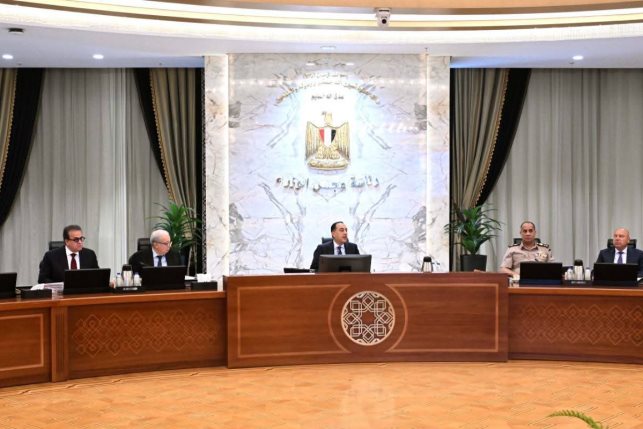
Earlier in April, Prime Minister, Mostafa Madbouly, emphasized Egypt’s current focus on bolstering the industrial sector to meet domestic product demands, localize industries, and enhance manufacturing practices.
The active Involvement of the private sector, a crucial partner in development initiatives, is pivotal for the nation’s progress at this stage, Madbouly added.
This industrial localization drive is a key part of Egypt’s broader economic diversification strategy. By developing local industry and reducing reliance on imports, the government aims to strengthen the country’s economic resilience, create more jobs, and retain more of the value generated by industrial activity within Egypt’s borders.
Enhancing domestic manufacturing is viewed as a key strategy to boost productivity, consequently raising the gross domestic product, creating numerous job opportunities, and producing goods with a higher proportion of local components.
To drive this localization push, the government has rolled out an array of supportive policies and incentives.
This included holding meetings with Egyptian investors and factory owners to encourage them to increase local production and encourage foreign investors to establish their industrial projects in Egypt.
Egypt also depends on launching national initiatives that encourage the localization of the industry, such as the Ebda Initiative.
National Initiative for Industry (Ebda)
In 2022, the national Ebda initiative was launched under the directives of President Abdel Fattah El-Sisi. The initiative aims to develop the domestic industrial sector and provide support for factory owners.
The key objectives of the Ebda initiative are to remove obstacles facing the industrial sector, whether by facilitating procedures or regularizing situations, in cooperation with the relevant authorities responsible for resolving problems. The initiative also seeks to support new projects to increase investments.
The initiative also focuses on the role of the private sector in localizing development and innovation in the industrial sector to build a diversified and competitive economy to achieve the sustainable development goals of Egypt’s Vision 2030.
The initiative succeeded in localizing 23 new industries in Egypt, in addition to attracting investments for 24 companies, comprising 14 foreign companies and 33 Egyptian companies, according to a report released by Egypt State Information Service (SIS).
Additionally, Ebda examined 84 industrial investment opportunities and succeeded in implementing 23 existing projects as a first phase at an investment cost estimated at EGP 62.5 billion, worth 1.3 billion dollars. This represents 28% of the total industrial investments made in the last 3 years.
The SIS’s report also pointed to technical and financial studies for 24 projects as a second phase and a study of 37 future opportunities.
“The efforts currently underway to develop the industrial sector in Egypt are a crucial step in the right direction,” Economist & International Cooperation Specialist at Social Housing and Mortgage Finance Fund (SHMFF), Mohamed Elzaaem in a conversation with Business Today Egypt.
Deputy Prime Minister and Minister of Industry and Transport, Kamel Al-Wazir, has taken significant steps in this direction through several strategic decisions since assuming his position, Elzaaem added.
These included preventing the closure of any industrial facility without the Ministry’s approval, granting industrial facilities an 18-month grace period to rectify their situations, and working to increase the industrial workforce from 3.5 million to 7 million workers, to boost productivity.
“Egypt needs a comprehensive approach that addresses infrastructure, workforce, and the regulatory environment to achieve the localization of industry,” the Economist at SHMFF added.
This includes investing in transportation, energy, and communication networks, strengthening vocational education and training, and investing in research and development.
Additionally, the country should offer tax incentives to companies investing in local manufacturing, strengthen local supply chains, and support companies in accessing global markets, Elzaaem stated.
Most importantly, establish a central management body for public policies to ensure coordination and prevent conflicts between different ministries. This will help to create a more effective and comprehensive strategy for localizing industry in Egypt.
“To deepen industrial growth in Egypt, the country needs to focus on developing the role of emerging small and medium enterprises (SMEs), promote local production of intermediate components to replace imports, address production challenges with innovative and technological solutions, particularly through collaborative efforts,” El-Biesi added.
El-Biesi also pointed to the need for emphasizing support for innovation, emerging entrepreneurial projects, and deepening local manufacturing, as these ventures play a vital role in supporting value chains and contributing to economic growth.
The country needs to provide sector-specific packages of incentives and tax exemptions for green economy and manufacturing activities, targeting SMEs and startups, he added.
Egypt’s Focus on Enhancing Key Industries: Textile, Electronics, Automotive, and More
Egypt focused on enhancing several industries that possess a competitive edge compared to other nations, particularly the textile sector, according to a report issued by the Egyptian Center for Thought and Strategic Studies (ESCC) in April.
Additionally, the nation seeks to promote the localization of industries that heavily rely on imports, like electronics, as well as advancing the localization of the automotive industry.
This effort also involved reinforcing Egypt’s traditional sectors such as furniture and leather.
The ESCC report also pointed to the implementation of the largest industrial city in Egypt for spinning and weaving, in cooperation with China, in 2019 in Sadat City.
Egypt also focused on the localization of the car industry. In 2022, Egypt’s Prime Minister, Mostafa Madbouly, launched a national strategy for localizing the automotive industry.
The objective of the strategy is to establish Egypt as a main gateway for emerging vehicle markets in Africa and to build strong commercial and investment relations with main regional trade partners to ensure sustainable development growth for all sides.
In August, Madbouly met with representatives from Nissan Egypt and Kasrawy Automotive Group to discuss local manufacturing and export opportunities. Nissan plans to invest $55.9 million by 2026 to strengthen its market leadership, while Kasrawy Group, with a current investment of EGP 3.25 billion, aims to produce 5,000 cars annually with a total investment of $16 million.
Egypt focused on developing green industries and promoting the localization of the green hydrogen and green ammonia sectors. This effort involved creating specialized industrial zones and introducing Egypt’s green hydrogen strategy, which offers numerous incentives to attract investors to the sector.
Recently in August, Integrated Environment Technologies (IETOS) initiated the establishment of the green industrial complex in the industrial zone of New Alamein City with investments of EGP 12 billion, according to a statement issued by the Ministry of Housing, Utilities, and Urban Communities.
The production is expected to begin in the second quarter of 2025, with a local component ranging from 60 to 70%.
Madbouly emphasized the significance of the strategy in aligning with the Sustainable Development Goals outlined in Egypt’s Vision 2030. The initiative is expected to diversify the nation’s energy sources, reduce carbon emissions, and fulfill its international climate change commitments.
“The value of the Egyptian pound against the dollar presents a potential opportunity for attracting foreign investment in manufacturing. This is due to lower production costs for foreign investors, as labor, raw materials, and rent become more affordable,” Elzaaem added.
Focusing on industries where Egypt has a competitive advantage, such as labor-intensive sectors or those utilizing local natural resources, will further attract investment and build expertise in specific areas.
The Economist at SHMFF also pointed to the need for launching promotional campaigns abroad to highlight the opportunities and benefits for investors.
“The devaluation of the Egyptian pound presents a double-edged sword for exports. While it opens up new markets, it also increases the cost of imported inputs, which constitute 50% of production costs,” El-Biesi added.
This could hinder price competitiveness, but also presents an opportunity for localizing these inputs through SMEs, provided they meet quality standards and skilled labor is available.
This aligns with Egypt’s Vision 2030, which aims to make industrial development the engine of sustainable economic growth, meeting local demand and boosting exports, he confirmed.
The government's economic reform program, including the introduction of VAT, fuel and electricity subsidy reduction, currency liberalization, and major national projects, is paving the way for sustainable development and economic growth, attracting both domestic and foreign investment.
Localizing technology is closely linked to foreign direct investment in manufacturing, particularly in the processing sector, economist El-Biesi confirmed.
Policies that attract FDI in this sector will likely lead to the adoption of advanced industrial technologies.
However, replicating these technologies requires government plans, programs, and policies, as well as a sense of developmental responsibility from the private sector