(This feature was published in the October issue, which was released before the IMF visit and the release of the October inflation data.)
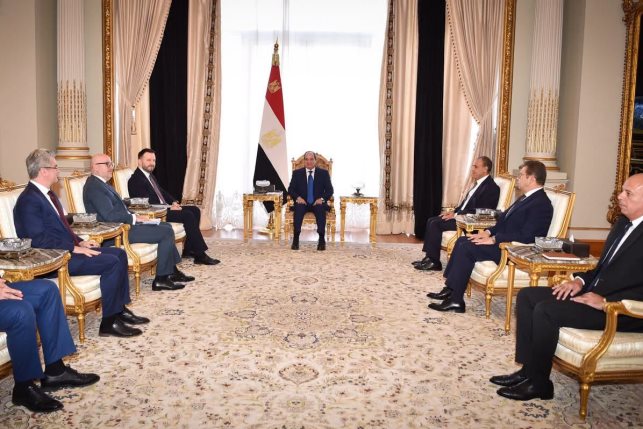
The rise in fuel prices has sparked widespread reactions among Egyptian citizens, prompting President Abdel Fatah El-Sisi to comment on the country’s agreement with the International Monetary Fund (IMF). El-Sisi emphasized the need for the government to review its position with the IMF if the program’s challenges begin to impose unbearable pressure on the public.
This directive comes at a time when Egypt is awaiting the completion of the fourth review of its $8 billion program with the IMF, to receive a tranche estimated at around $1.3 billion. As of October 18, 2024, Egypt's total commitments to the International Monetary Fund amount to approximately $13.2 billion, according to IMF data.
President El-Sisi's comment followed Egyptian Prime Minister Mostafa Madbouly's announcement that there would be no further fuel price hikes for the next six months, despite the increase in October. The latest fuel price hike is part of the government’s ongoing efforts to reduce fuel subsidies and tackle inflation, which has been rising in recent months.
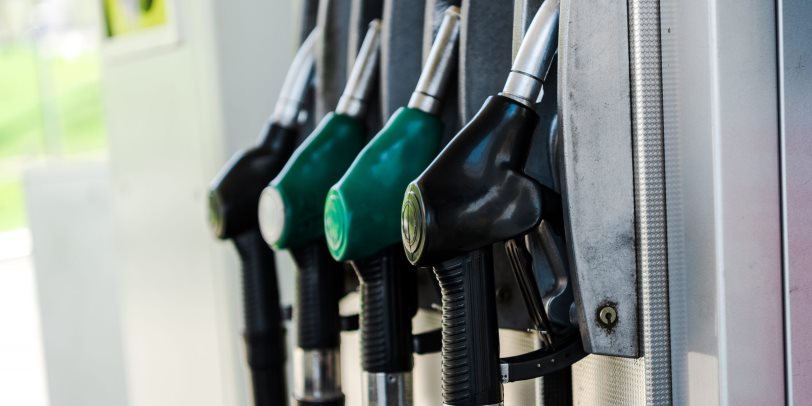
In coordination with the Ministry of Petroleum, the government decided that this would be the last fuel price increase until 2025, with the goal of stabilizing prices and mitigating inflation. The Egyptian Cabinet stated that gasoline prices increased between 11% and 13%, bringing 80-octane to EGP 13.75 per liter, 92-octane to EGP 15.25, and 95-octane to EGP 17. Diesel, which saw the largest jump, rose to EGP 13.50 per liter from EGP 11.50.
Madbouly reiterated that the government is obligated to gradually raise fuel prices until the end of 2025 due to the heavy financial burden caused by the global surge in petroleum prices. He noted that despite these increases, the government is absorbing most of the cost to prevent further disruptions to essential services like electricity.
The Egyptian government forecasts savings of EGP 80 billion by the end of the current fiscal year (2024-2025) as a result of these fuel hikes. The fuel subsidy bill has surged due to the rising cost of crude oil, but the price hikes are intended to narrow the gap between the selling price and actual costs.
Fuel price hikes are expected to further elevate inflation, which reached 26.4% year-on-year in September, up from 26.2% in August. The increase in diesel prices, in particular, is anticipated to drive up transportation and production costs, resulting in higher prices for goods, especially food and building materials.
Egypt consumes 18 billion liters of diesel annually, with the government subsidizing each liter by approximately EGP 6.5.
Energy price liberalization remains a core component of Egypt’s $8 billion agreement with the IMF. However, continued depreciation of the Egyptian pound could lead to further increases in fuel prices and inflationary pressures.
Egypt's Ministry of Finance allocated EGP 154 billion for petroleum subsidies in the 2024-2025 fiscal budget, according to a statement from the presidency in March, down from EGP 165 billion in the previous fiscal year (2023-2024). The maximum allowable price increase set by the Fuel Pricing Committee during each periodic review is capped at 10%.
Madbouly suggested that if oil prices stabilize at their current levels, further price hikes might not be necessary. He clarified that the government's fuel price hike plan was based on an estimated oil price of $80 per barrel.
As this article is being written, Brent crude has fallen to around $73 per barrel, its largest weekly drop in over a year, driven by global events such as efforts to resolve the Middle East conflict and reduced demand from China.
Egypt’s inflation rate had been trending downward from its peak of 38% in September 2023, but it unexpectedly rose again in August and September 2024. This prompted the Central Bank of Egypt to keep interest rates at their highest levels in history for the fourth consecutive time on October 17.
The Central Bank has not changed interest rates since it raised them by 600 basis points during an extraordinary meeting in March, as part of the IMF loan agreement. That hike followed a 200-basis-point increase in early February.
Sarah Saada, senior macroeconomic analyst at CI Capital, explained that the past two months have seen inflationary pressures, particularly following the pricing adjustments of petroleum products in the domestic market last August, along with increases in electricity prices.
She added that October also reflects the annual rise in school tuition fees, a seasonal factor contributing to inflation this month.
Given these reasons and the ongoing inflationary pressures, she believes it is too early to begin a monetary easing cycle in Egypt. She further expects inflation to decrease to around 25% in the coming period but warned that it could rise again due to persistent inflationary pressures.
According to Saada, inflation is likely to ease by February next year, as the base year will reflect a higher comparison period. She also forecasts that the average inflation rate next year will range between 15% and 16%, with a potential for further decline if global commodity prices fall.
The senior analyst ruled out any interest rate cuts by the Central Bank before its final meeting in December, although she expects monetary easing to begin in the first quarter of next year.
The financial research division at "HC Securities and Investment" expects inflation to accelerate by 1% monthly and 26.5% annually as of October, driven by the increase in electricity prices and rising energy costs.
Similarly, Ramona Mubarak, head of risk management for the Middle East and North Africa at Fitch Solutions, has predicted that inflation rates in Egypt will rise in October, attributing this expectation to seasonal factors and the recent fuel price hikes.
Mubarak explained that the removal of fuel subsidies by the end of 2025 necessitates that Egyptian authorities gradually raise fuel prices every three months.
For her part, Mervat El-Khassan, a member of the Planning and Budget Committee in the House of Representatives, affirmed that addressing inflation comes through enhancing market oversight, developing mechanisms for distributing goods, and implementing targeted support programs.
In a T.V. interview, economist Mohamed Fouad pointed out that inflation rates have started to rise again after a period of decline in recent months. He explained that the Central Bank did not reduce interest rates due to this increase, adding that the state is experiencing a "financial squeeze," with around 62% of the country’s total funds being directed towards debt repayment, which is placing significant pressure on the remaining financial resources.
Fouad noted that the proportion of debt repayments has steadily increased from 43% to 48%, and now to 62%. He also mentioned that in the last two months of this year, Egypt needs to repay debts exceeding $11 billion.
He further discussed Egypt’s agreement with the IMF, which includes ending energy subsidies by December and increasing tax revenues. He highlighted that there is a clear agreement to apply value-added tax (VAT) to 18 products out of 58 that were previously exempt.
He also emphasized that supporting the most vulnerable groups is crucial at the moment, stressing the importance of accurately identifying these groups. He concluded by stating that the country needs to increase its income through more investment, which would naturally lead to higher tax revenues.