Al-Mashat said security in the Middle East should be measured not only through military balances and deterrence, but also by the ability of societies and economies to recover, attract investment, trade and create jobs.
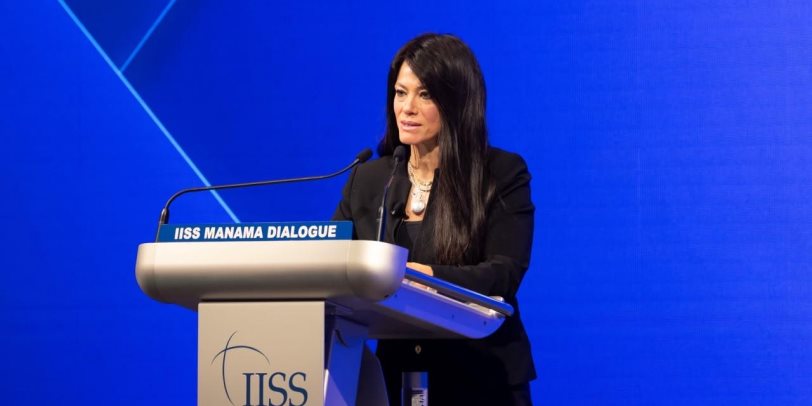
Rania Al-Mashat, United Nations Under-Secretary-General and Executive Secretary of the Economic and Social Commission for Western Asia (ESCWA), has called for a new Arab economic agenda that moves beyond post-conflict reconstruction towards sustainable prosperity, arguing that regional integration and stronger institutions are essential to long-term stability.
Speaking at the 2026 Manama Dialogue in Bahrain, Al-Mashat said security in the Middle East should be measured not only through military balances and deterrence, but also by the ability of societies and economies to recover, attract investment, trade and create jobs.
She stressed that reconstruction cannot deliver lasting prosperity without restoring productive capacities, rebuilding effective institutions and reconnecting conflict-affected economies to regional markets and infrastructure networks.
The Arab region bears a disproportionate share of global conflicts and humanitarian crises. Around 40% of conflict-related deaths worldwide occurred in the region in 2025, while one in every three people globally requiring humanitarian assistance lives there, according to figures cited by Al-Mashat.
The number of people in need of humanitarian assistance across the Arab region rose from 76 million in 2025 to 81 million in 2026.
Al-Mashat warned that prolonged conflicts cause cumulative damage to education, livelihoods and institutional capacities, creating development setbacks that cannot be reversed through reconstruction projects alone.
She called for breaking the cycle of conflict and avoiding a prolonged state of “neither war nor peace”, stressing that lasting peace requires coordinated action at national, regional and international levels.
Al-Mashat highlighted regional connectivity as a strategic pillar of economic resilience, calling for an integrated geoeconomic system linking trade corridors, ports, energy networks, digital infrastructure and food security routes.
Rather than pursuing isolated infrastructure projects, Arab countries should develop integrated economic corridors that reconnect conflict-affected economies to regional markets and support trade, investment and production.
She also called for greater coordination on investment, regulatory frameworks and cross-border procedures to ensure that national connectivity projects complement one another and facilitate regional trade.
Regional energy connectivity could also strengthen energy security and economic resilience through expanded electricity trade, renewable energy integration and more reliable power grids, she said.
Al-Mashat added that the benefits of connectivity projects should extend beyond transit and logistics services to include regional value chains, industrial development, private investment and job creation, including in neighbouring countries affected by conflict.
The ESCWA chief stressed that economic and social prosperity should be placed at the centre of regional security strategies.
High unemployment, weak public services and social exclusion can create conditions that armed groups exploit in conflict-affected countries, she said.
She called for economic policies that link macroeconomic stability with tangible improvements in living standards through employment, housing, education, healthcare and digital access.
Al-Mashat also proposed exploring a “Regional Prosperity Compact” built around decent work and skills development, coordinated investment in transport, energy and communications corridors, and a permanent platform bringing together governments, development banks and private-sector investors.
The proposed platform would coordinate project implementation and address obstacles to regional investment and connectivity.
She concluded that development without regional integration remains incomplete, while institutional recovery and shared prosperity are essential to sustaining peace across the Arab region.