He added that the strategy will also focus on raising public awareness and harmonizing government standards and systems to ensure the efficient and secure exchange of data.
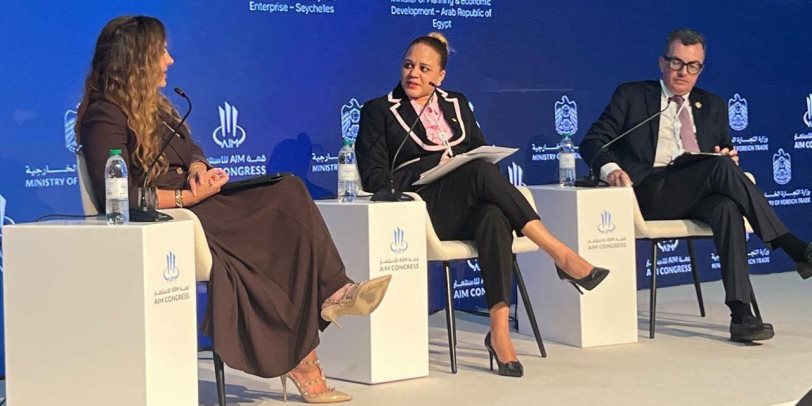
Ahmed Rostom, Minister of Planning and Economic Development, said Egypt has begun working with the Organisation for Economic Co-operation and Development (OECD) to develop a national artificial intelligence strategy, as part of the government’s broader drive to expand the use of emerging technologies and support technological transformation across economic sectors.
Speaking during a session titled The Quiet Reinvention of Global Manufacturing and the Art of Production at Scale at the 15th AIM Investment Summit in Dubai, Rostom said the strategy aims to establish an integrated five-year vision for maximizing the benefits of artificial intelligence applications in a responsible manner.
He added that the strategy will also focus on raising public awareness and harmonizing government standards and systems to ensure the efficient and secure exchange of data.
Rostom stressed the importance of keeping pace with the rapid expansion of AI through clear legislative and regulatory frameworks that ensure transparency, accountability and effective governance of emerging technologies. He also highlighted the need for stricter cybersecurity standards to mitigate risks associated with autonomous interactions between algorithms and digital systems.
He said the integration of advanced technologies into productive sectors has become a key driver of economic competitiveness and investment attraction, noting that Egypt is working to expand its manufacturing base and capitalize on investment opportunities in high-value-added industries.
Rostom said the manufacturing sector has maintained positive growth for 19 consecutive periods and contributed around 1.1 percentage points to Egypt’s overall economic growth rate of 5.1 percent during fiscal year 2025/2026.
He identified textiles, automotive manufacturing and value-added services as promising areas for both domestic and foreign investment, supporting efforts to deepen industrialization and increase the contribution of productive sectors to economic growth.
Rostom emphasized that using artificial intelligence to improve production processes should not be viewed as replacing workers with machines, but rather as empowering employees to manage modern technologies, oversee their operation and control their outputs.
He also stressed that investment in human capital is essential to keeping pace with technological transformation, calling for the development of curricula, education and training programs, as well as greater investment in science and technology disciplines at universities to make digital skills accessible to a broader segment of society.
Rostom warned that failure to develop human skills in line with technological progress could widen the digital divide in the labor market and turn it into a structural challenge for future employment opportunities.
He said digital and technological transformation must therefore advance alongside efforts to train and upskill the workforce, ensuring that people are equipped to effectively use and manage artificial intelligence tools.