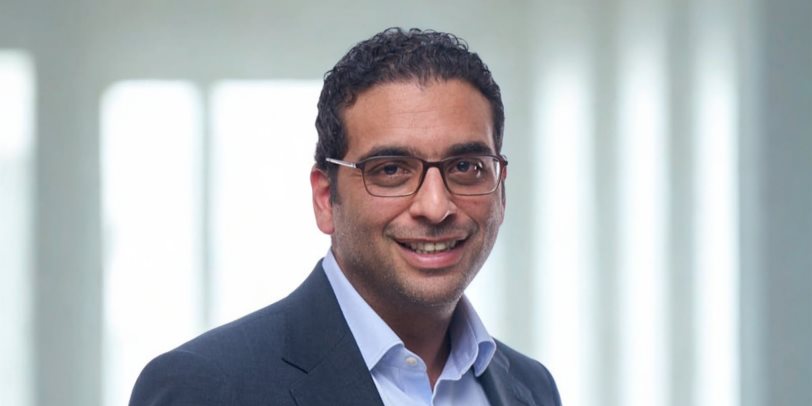
Egypt’s success in eliminating hepatitis C is giving way to a broader healthcare challenge focused on sustaining liver health, strengthening early detection and building an integrated system for patients at risk of liver cancer, according to Ziyad El Ahwal, Head of Government Affairs, Health Policy and Market Access at Roche Egypt.
Speaking during a World Hepatitis Day 2026 event marking three years since Egypt received the World Health Organization’s (WHO) Gold Tier recognition for hepatitis C elimination, El Ahwal said the next phase would require a shift from mass disease elimination campaigns toward a more resilient, data-driven model of long-term liver care.
“Yet, eliminating the virus is not the last chapter” in comprehensive care for liver-related disease, El Ahwal said, noting that the transition would involve strengthening surveillance, patient registries and multidisciplinary care.
He said the approach includes embedding advanced diagnostic surveillance into the healthcare system, digitizing registries to generate real-world evidence, upgrading specialized centers and strengthening the capabilities of healthcare professionals.
The shift comes after Egypt’s large-scale hepatitis C elimination campaign, which created what El Ahwal described as a significant national healthcare asset, including extensive health data, trained clinical networks, treatment infrastructure and greater public awareness.
Focus shifts to liver cancer detection
With hepatitis C elimination reducing the future burden of the virus, El Ahwal said greater attention is now being placed on patients who remain at risk of hepatocellular carcinoma (HCC), or liver cancer.
“Following the success of Egypt's Hepatitis C elimination journey, the next priority is ensuring that patients at risk are diagnosed early and receive timely, integrated care,” he said.
The emerging model spans surveillance and early detection, data-driven decision-making, multidisciplinary care, treatment infrastructure and workforce development.
According to El Ahwal, the focus is increasingly on ensuring that high-risk patients can be identified and followed through the healthcare system, rather than relying on episodic campaigns.
The broader transition is expected to involve risk stratification, long-term patient registries, digital surveillance and recall systems, advanced diagnostic imaging, non-invasive fibrosis assessment, HCC screening and early-detection technologies, as well as multidisciplinary cancer-care networks.
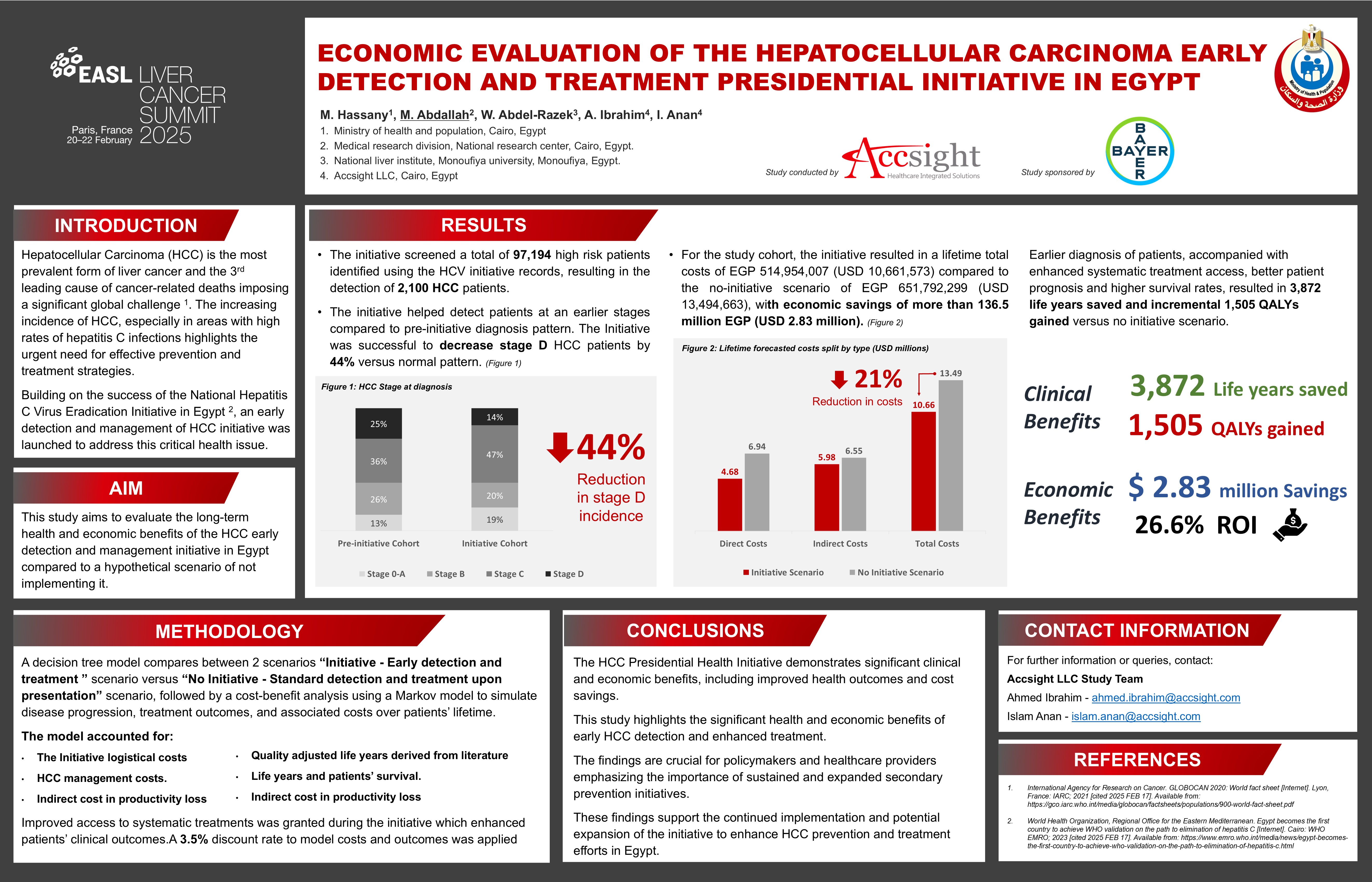 EASL Liver Cancer Summit - HCC PI EE Poster V1 2025
Digital health and real-world evidence
El Ahwal said digitalization is also becoming a central component of the next phase, with efforts aimed at strengthening data registration systems and generating real-world evidence that can support healthcare decision-making.
He said such systems can help strengthen national clinical guidelines, improve resource allocation and support clinical research capabilities.
The approach also extends to healthcare workforce development, with training covering physicians, nurses, pharmacists and administrative staff in areas including disease management, treatment administration and adverse-event protocols.
For Egypt, the objective is to move beyond measuring the number of people screened or treated toward assessing longer-term outcomes, including survival, quality of life, access to care and the economic value generated by healthcare interventions.
Egypt eyes wider regional role
El Ahwal also pointed to Egypt’s potential to build on its experience in nationwide screening and hepatitis C elimination to strengthen its position as a regional center for healthcare knowledge and innovation.
Egypt’s experience, he said, has created expertise that could extend beyond its borders, particularly across Africa and the Middle East.
He said Egypt could increasingly serve as a center for knowledge exchange, clinical excellence and healthcare innovation, while healthcare models developed through the country’s experience could be adapted in other markets.
The opportunity extends beyond healthcare delivery to manufacturing and technology transfer.
El Ahwal said Egypt’s hepatitis C experience demonstrated how local manufacturing could improve affordability, strengthen supply security and enable access at scale.
Similar approaches could be applied to medicines, diagnostics and selected liver-care technologies.
From campaigns to a continuous-care ecosystem
The transition is also creating a new set of opportunities for healthcare companies and investors, but El Ahwal stressed that the opportunity goes beyond supplying individual medicines, tests or technologies.
“The larger opportunity is to build integrated solutions that help the health system identify the right patient, at the right time, and connect that patient to affordable and appropriate care,” he said.
This means the liver-health market is increasingly moving from an episodic, campaign-based model toward a continuous-care ecosystem built around data, surveillance, early diagnosis, treatment and follow-up.
El Ahwal said the development is particularly relevant for policymakers and investors seeking to understand the next stage of Egypt’s healthcare transformation.
Public-private partnerships
El Ahwal said stronger public-private partnerships would also be important in translating the hepatitis C experience into a sustainable model for prevention, early detection and advanced treatment.
He said the government should retain responsibility for national strategy, regulation, equitable access and accountability, while private-sector and academic partners can contribute technology transfer, manufacturing, financing models, clinical research, digital infrastructure and implementation expertise.
However, he emphasized that effective partnerships require clear governance, including defined public-health objectives, responsibilities, pricing and access conditions, data governance, as well as measurable clinical and economic outcomes.
“The objective is not to transfer public responsibility to the private sector,” El Ahwal said. “It is to combine public stewardship with private and academic capabilities around measurable value: earlier diagnosis, better outcomes, wider access and sustainable costs.”
He added that Egypt’s hepatitis C experience demonstrated that political commitment, population-scale screening, affordable innovation, local manufacturing and disciplined health-policy execution can transform a major public-health burden.
The next challenge, he said, is to build a permanent liver-health model connecting prevention, surveillance, early HCC detection, advanced treatment and economic evaluation.
“The real measure of success will no longer be only how many people were screened or treated, but how many lives were extended, how much quality of life was preserved, and how much sustainable value was created for patients, the healthcare system and the wider economy.”