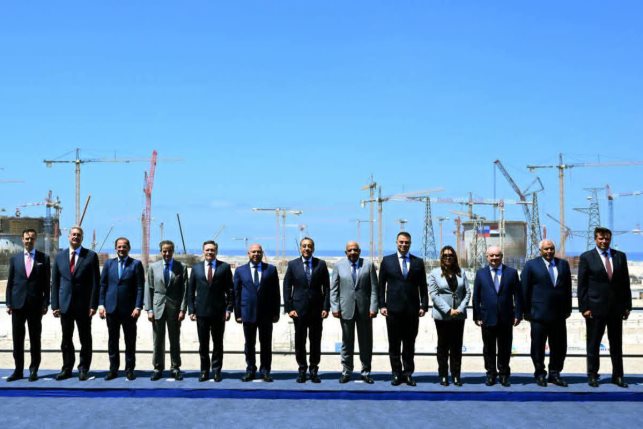
The financing will support the development of electricity transmission infrastructure and improve the operational efficiency of the national grid.
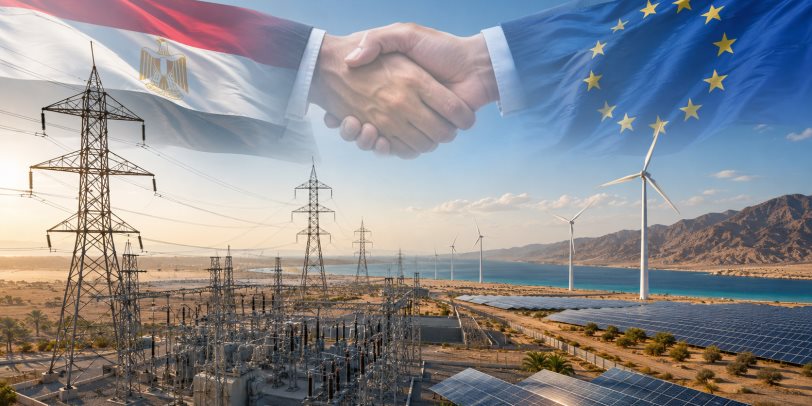
The European Union is preparing to sign a €90 million grant agreement with the Egyptian government in the coming weeks to accelerate the modernization of Egypt’s electricity grid and strengthen its capacity to absorb the growing output from renewable-energy projects.
The funding forms part of a broader strategy to support Egypt’s transition into a regional energy hub, according to Dr. Ahmed El-Beltagy, Head of Transport, Energy and Climate at the EU Delegation to Egypt.
In an interview with Al Arabiya Business, El-Beltagy said the grant is expected to be signed at the beginning of the third quarter of the year and disbursed over three to four years. The financing will support the development of electricity transmission infrastructure and improve the operational efficiency of the national grid.
He added that the European Union is currently conducting feasibility studies for the development of eight electricity distribution control centres across Egypt, with the aim of financing them through EU grants. The projects are intended to accelerate Egypt’s transition towards a more diversified and renewable-based energy mix.
El-Beltagy also noted that 2026 will see the provision of a €35 million grant to Norwegian renewable-energy company Scatec to support its green ammonia production project in Egypt. The move reflects the EU’s wider focus on increasing investment in future fuels and in value chains linked to green hydrogen.
In parallel, the EU is working with international financial institutions on additional financing packages. These include a €600 million loan from the European Investment Bank, which has already been signed, to expand the capacity of Egypt’s electricity transmission network.
The EU is also in discussions with several financial institutions to provide investment guarantees for UAE-based Alcazar Energy to implement new electricity and renewable-energy projects in Egypt. The mechanism relies on offering guarantees to private-sector investors rather than sovereign guarantees, helping reduce investment risk and attract foreign capital into the Egyptian market.
El-Beltagy stressed that these investments are strategically important given Egypt’s expanding pipeline of solar and wind-energy projects. Transmission and distribution networks are considered critical to ensuring that new generation capacity can be effectively integrated into the grid and that electricity produced in key renewable-energy areas, particularly the Gulf of Suez and Upper Egypt, can be transported efficiently to demand centres.
Such upgrades are expected to reduce technical bottlenecks and enhance the overall efficiency and reliability of Egypt’s electricity system.
The EU is also considering grant funding to upgrade hydropower plants by modernizing turbines at existing dams. This would help increase renewable-electricity output while improving the efficiency of existing energy assets.
During 2025, the European Union provided several grants to Egypt’s government, including €60 million to finance the Alexandria electricity transmission control centre. The package included €50 million from the French Development Agency and €10 million from the European Union.
In addition, the EU provided a €35 million grant to expand electricity transmission lines needed to accommodate renewable-energy generation from the Gulf of Suez, supported by a €160 million European Investment Bank loan to Egypt’s Ministry of Electricity.
According to El-Beltagy, the EU’s long-term vision for Egypt’s energy sector is based on increasing the share of renewable sources to 65% of total electricity generation by 2040. Egypt’s target of producing around 22 gigawatts of renewable energy by 2030 is seen as a positive indicator of the accelerating transition in the country’s energy mix.
However, he emphasized that achieving these targets will depend directly on the speed of transmission and distribution grid development. Renewable-energy expansion will not deliver its full economic value without a smart, resilient electricity infrastructure capable of absorbing new loads and connecting projects to the national grid efficiently.