The projects include the development of wind power plants in the North Gulf of Suez, South Ras Shukeir, Jabal El Galala, and Northwest Zaafarana, with a combined capacity of 4,750 MW.
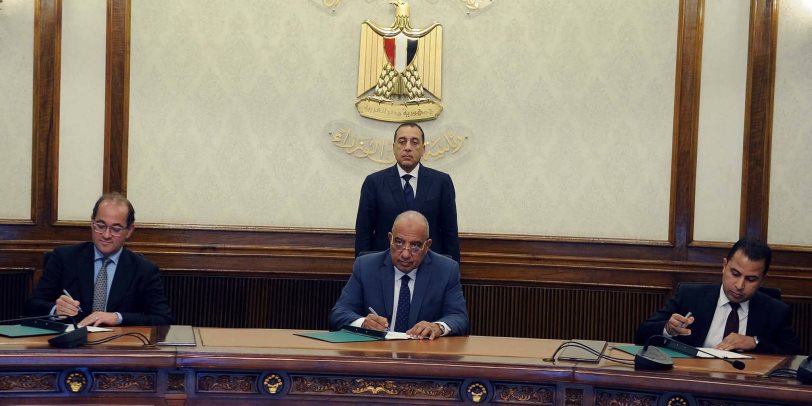
Prime Minister Mostafa Madbouly witnessed the signing of a protocol agreement between Tahya Misr Holding for Investment and Development and the Ministries of Electricity and Renewable Energy and Finance to fund a number of new and renewable energy projects.
The projects include the development of wind power plants in the North Gulf of Suez, South Ras Shukeir, Jabal El Galala, and Northwest Zaafarana, with a combined capacity of 4,750 MW.
They also include independent battery energy storage systems with a total capacity of 4,000 MWh, to be established in South Cairo, Damanhour, and Wadi El Natrun.
The protocol aligns with directives from President Abdel Fattah El-Sisi to pursue a well-planned expansion in renewable energy projects, increase reliance on clean energy within the national energy mix, and reduce dependence on fossil fuels.
It also aims to enhance the resilience and stability of the national electricity grid by integrating battery storage systems, upgrading infrastructure, and expanding the grid’s capacity to absorb renewable energy.
These efforts are part of Egypt’s national energy strategy, which targets raising the share of renewables in the energy mix to 45% by 2028.
Minister of Electricity and Renewable Energy Mahmoud Esmat stated that the protocol supports ongoing efforts to accelerate the implementation and grid connection of renewable energy projects. Tahya Misr Holding will provide the necessary financing and oversee execution, with generated electricity to be accounted for in Egyptian pounds, in line with pricing mechanisms applied to other developers.
He added that agreements will be signed between the Egyptian Electricity Transmission Company and the New and Renewable Energy Authority with the project developers responsible for execution. The projects are expected to be completed and connected to the grid within two years.
Esmat emphasized that the electricity and renewable energy sector places strong focus on expanding renewable energy use, reducing carbon emissions, and diversifying energy sources.
He noted that integrating battery storage systems into renewable-based grids is essential to maximizing energy utilization and maintaining grid stability, especially during peak demand.
The minister also highlighted the private sector’s role as a key partner in renewable energy projects, affirming the government’s commitment to facilitating increased local and foreign private investment in the sector.