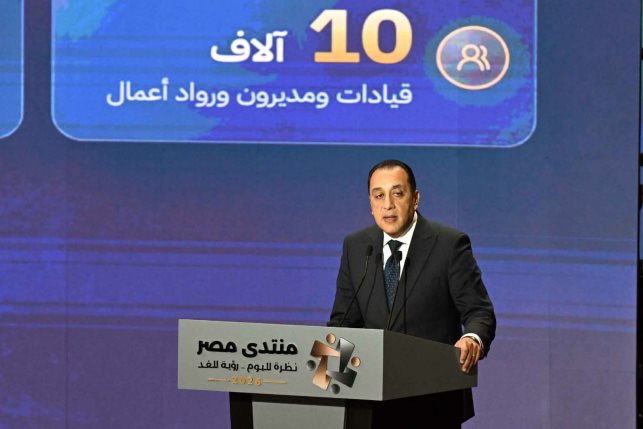
Egypt’s Minister of Planning and Economic Development Ahmed Rostom presented Wednesday the country’s economic and social development plan for fiscal year 2026/2027, targeting growth of 5.4%, rising to 6.8% by 2029/2030 under the medium-term framework.
The plan sets total investments at around EGP 3.7 trillion, with the private sector accounting for 59% of the total, with a target to increase its share to 64% by 2030. The investment-to-gross domestic product (GDP) ratio is expected to reach 17% next fiscal year, rising to 20% by the end of the plan period.
Rostom said five key real economy sectors will drive about 64% of growth, led by manufacturing with a 29% contribution, followed by wholesale and retail trade (11.3%), tourism (9.3%), construction (7.2%), and agriculture (7%).
GDP at current prices is projected to reach EGP 24.5 trillion in FY2026/2027, up from an estimated EGP 21.2 trillion in the current fiscal year, and rising to EGP 36.8 trillion by 2029/2030. Agriculture, industry, construction, and trade together account for about 62% of GDP.
On the social front, the plan includes a 25% increase in health spending, with continued rollout of the universal health insurance system, including expansion into Alexandria. Education spending for pre-university levels will rise by 11.5%, including plans to establish 100 Japanese schools, build 13,000 new classrooms, and rehabilitate 1,000 technical schools in partnership with the private sector.
Social protection allocations are set to increase by 57%, while infrastructure investments will continue to expand, including a 22% increase in water and sanitation spending, 21% in social housing, 88% in irrigation, and a 261% surge in renewable energy investments.
Rostom said the “Haya Karima” initiative remains a top priority, with the government aiming to complete phase one and begin phase two during the upcoming fiscal year.
He noted that global geopolitical and economic challenges, including supply chain disruptions, inflation, and rising energy prices, pose risks but also create opportunities for import substitution, industrial localization, and export growth.
The minister added that a more conservative growth scenario of 5.2% has also been considered, depending on global uncertainties, stressing that the plan ultimately aims to improve citizens’ quality of life, not just headline economic indicators.