Egypt’s Ministry of Transport has begun construction of a major logistics zone in Arish, spanning 603 feddans, as part of a broader strategy to strengthen logistics infrastructure in North Sinai and enhance regional trade flows.
The new zone will include storage yards, loading and unloading areas, administrative buildings, and cold storage facilities, aimed at supporting transit trade and improving supply chain efficiency, according to a ministry statement released Wednesday.
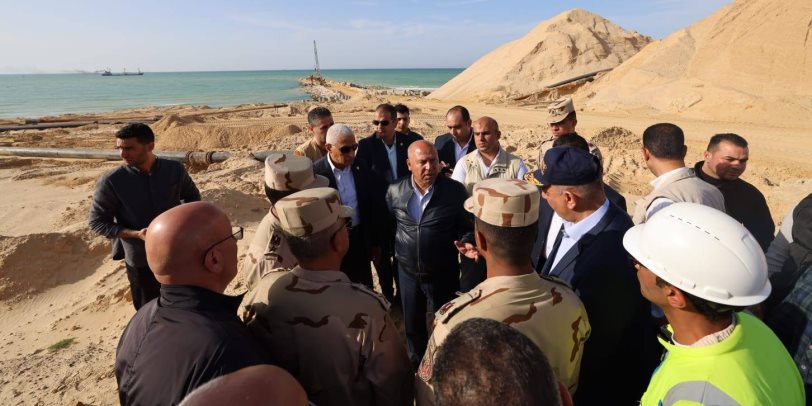
Transport Minister Kamel El-Wazir said during a site visit to North Sinai that accelerating implementation of the project is a priority, describing it as a key component of the Arish–Taba logistics corridor, a strategic route linking the Mediterranean Sea with the Gulf of Aqaba.
He added that the Arish logistics zone is part of a wider network of logistics hubs under development across Sinai, including East Qantara, Rafah, Baghdad, Hassana, Naqb, Taba, El Tor, and Ras Sudr, which are expected to attract investment and support trade flows.
The corridor will also integrate with the “Arab Corridor” project, aimed at linking Egypt with Jordan and Iraq and strengthening its role as a regional trade hub.
Egypt plans to establish 7 integrated logistics corridors comprising 33 logistics zones and dry ports, connecting production areas with seaports on both the Red Sea and the Mediterranean.
During the tour, the minister also reviewed ongoing upgrades at Port of Arish. Marine works are progressing in three phases, with the first and third phases completed and the second phase reaching 51.1%. Work on the eastern basin’s second stage stands at 21.4%.
He also inspected a cement silos project at the port, which includes four silos with a capacity of 10,000 tonnes each, designated for handling white and grey cement, along with supporting infrastructure.
El-Wazir said the Port of Arish, North Sinai’s only Mediterranean seaport, plays a strategic role in supporting development and facilitating trade between Europe and Asia, as part of Egypt’s plan to position itself as a regional logistics hub.