President Abdel Fattah El-Sisi said Sunday that the funds the Egyptian government allocates to support fuel prices are financed through borrowing, underscoring the fiscal strain of maintaining fuel subsidies amid broader economic pressures.
Speaking at the 42nd Armed Forces Cultural Symposium in Cairo to mark the 52nd anniversary of the October War victories, El-Sisi explained that while the difference between market prices and subsidized fuel prices may seem moderate, the real burden lies in the fact that “the money used for subsidies is borrowed.”
“The pound I put into fuel isn’t just one pound, it’s a pound plus the debt behind it,” the president said. “We must all shoulder responsibility in changing our reality through effort and endurance.”
El-Sisi added that addressing Egypt’s fiscal and economic challenges requires difficult decisions rather than postponement.
“If my budget is EGP 1 billion, and I have only 900 million, I’ll have to borrow 100 million,” he said. “Next year, the problem grows unless we act. We’ll suffer, but by God’s will, this issue will be resolved. Don’t worry about Egypt.”
The president’s remarks came two days after Egypt’s Ministry of Petroleum and Mineral Resources announced an increase in domestic fuel prices across all categories, effective Friday morning.
Under the new pricing structure:
Octane 95: EGP 21 per liter (up from EGP 19)
Octane 92: EGP 19.25 per liter (up from EGP 17.25)
Octane 80: EGP 17.75 per liter (up from EGP 15.75)
Diesel: EGP 17.5 per liter (up from EGP 15.5)
Compressed Natural Gas for vehicles: EGP 10 per cubic meter (up from EGP 7)
According to the ministry’s statement, the decision reflects ongoing global and regional developments affecting energy prices. The government also confirmed that fuel prices will remain fixed for at least one year, with no further increases planned during that period.
The move comes as part of Egypt’s broader economic reform program aimed at rationalizing subsidies and stabilizing public finances. Fuel subsidies remain one of the largest components of state expenditure, and the government has gradually reduced them over recent years to curb fiscal deficits.
El-Sisi emphasized that these adjustments are necessary steps in a long-term effort to strengthen Egypt’s economic resilience, adding that “there is no divide between the government and the people, this is our country, and we must face its challenges together.”

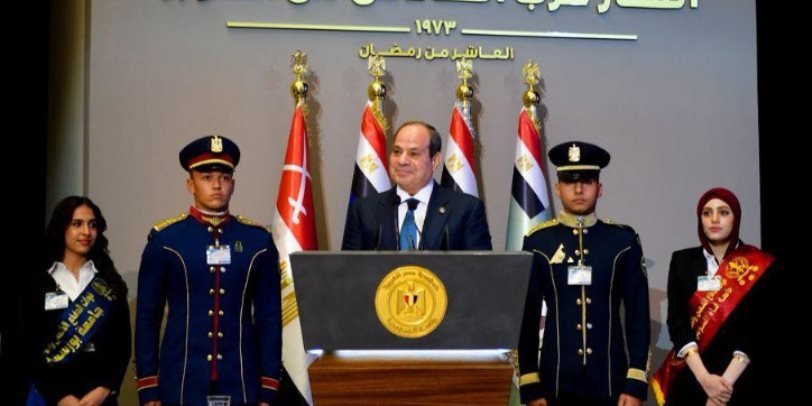 President El-Sisi