From aging workshops in Cairo’s oldest neighborhoods to modern showrooms attracting international attention, Wahba has not only revived fading trades, but transformed them into scalable, exportable business models
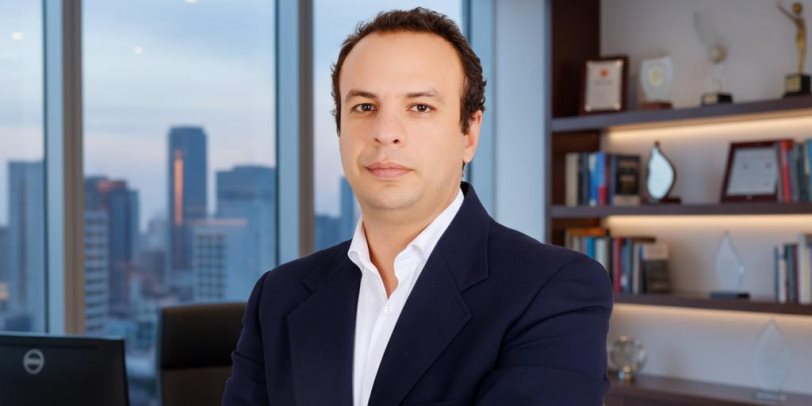
In a world obsessed with tech unicorns and billion-dollar valuations, Osama Wahba chose to bet on something far less glamorous — tailoring, shoemaking, and upholstery.
From aging workshops in Cairo’s oldest neighborhoods to modern showrooms attracting international attention, Wahba has not only revived fading trades, but transformed them into scalable, exportable business models. His brands — Mr. Tailor, Mr. Cobbler, and Mr. Sofa — have become household names in Egypt, with ambitions that now stretch across continents.
Through his, and most recently Disrupt Ventures, Wahba has created a rare kind of model: one that brings structure, scale, and global ambition to sectors long dismissed as informal or obsolete.
“When my peers from Cambridge and USC went to Wall Street or London to build their careers,” Wahba says, “I went the other way - into the aged, messy tailor and cobbler shops of Bab el-She3reya and Helwan. I wanted to understand why no major corporation had invested in these industries to save them from extinction. What I saw was a gap: incredible cultural heritage and craftsmanship, but no structure, no standards, and no branding. Preserving that heritage while modernizing it became a mission. Today, I am proud that our brands have not only built thriving businesses but also rescued trades that might otherwise have disappeared.”
.jpeg "WhatsApp Image 2025-10-01 at 11.52.08 AM (1)")
From Informality to Industry
Egypt’s textile and clothing sector is one of the country’s largest employers, engaging over two million people and contributing significantly to GDP (around 3%). Yet despite being one of the world’s top exporters of long-staple cotton, Egypt remains a net importer of finished goods.
His model isn’t about romanticizing craft. It’s about embedding it in a modern ecosystem: structured training, rigorous quality control, and scalable operations. But the human impact, he says, is just as important as the economic one.
“The real impact is not just the number of jobs created, but the transformation of lives. We built an academy that trains jobless individuals from scratch, turning them into skilled artisans,” Wahba explains.
“Many of our recruits once drove tok toks, never imagining they could master tailoring, shoemaking, or upholstery. Today, they enjoy steady incomes, stable family lives, and a sense of dignity. Because we are the market leaders, competitors now actively try to ‘hunt’ our staff – proof that we’ve turned them into highly desired professionals. What I am most proud of is that our attrition rate is just 12% compared to an industry average of around 60%. That stability changes how workers see themselves and how the market values them.”
Scaling the Right Way
Wahba’s brands now span dozens of locations. But scaling hasn’t meant compromising on quality. Quite the opposite. The systems that support growth are modeled on world-class franchises.
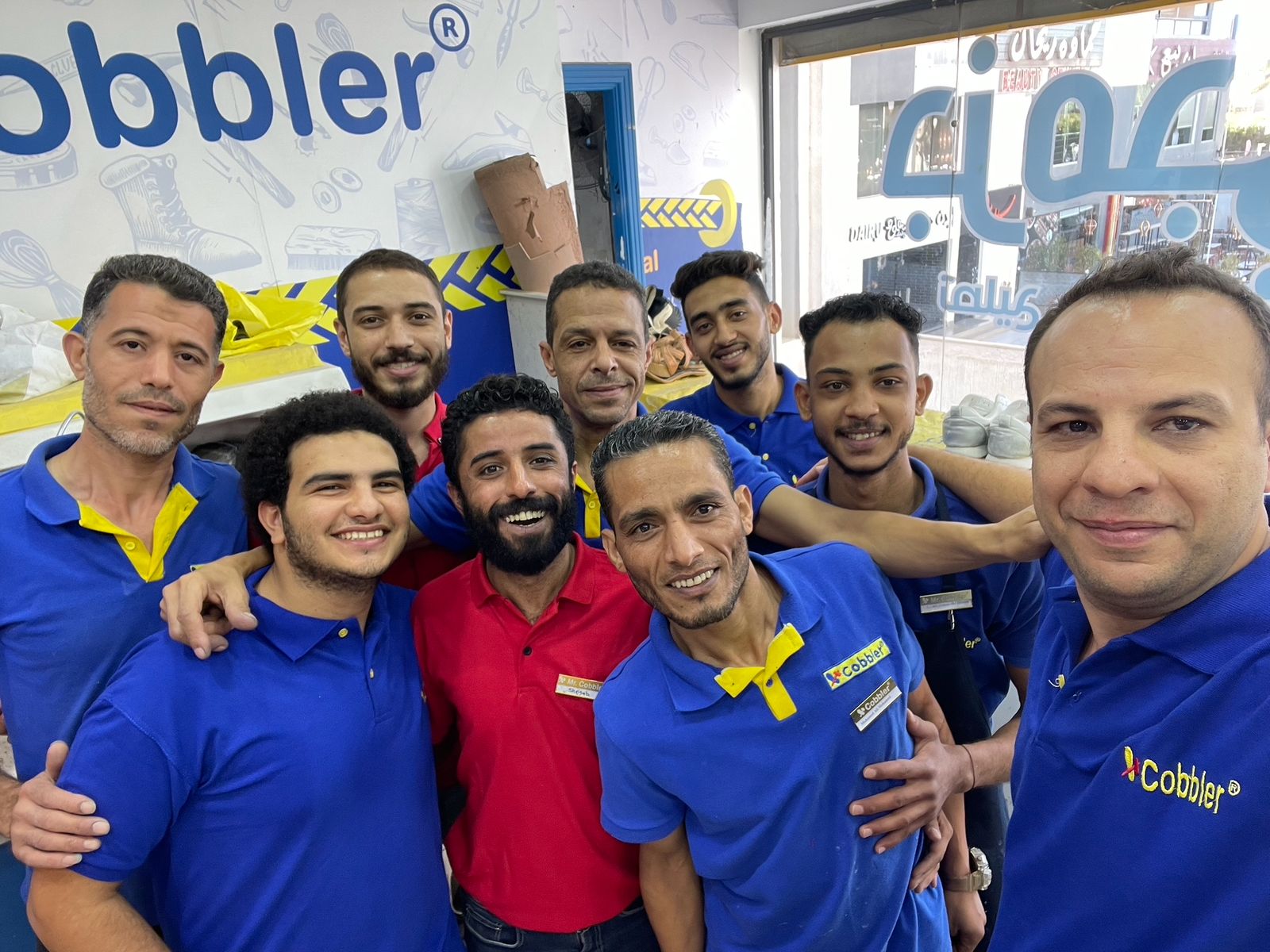
“Scaling is always a challenge, but we approached it with discipline,” he says. “We developed a detailed operations manual, rigorous training, and structured audits. We also created ‘franchise town halls,’ where franchisees could vote on innovations and share challenges, making them partners in quality rather than passive operators. To explain our vision, I often draw comparisons. McDonald’s grew from a burger stand to 40,000 outlets; Starbucks expanded from a single coffee shop to over 30,000. We aspire to be the McDonald’s of tailoring and the Starbucks of cobbling, [to be] one of the few Egyptian brands, like Oriental Weavers, capable of exporting our model worldwide.”
That ambition is already taking shape through Disrupt Ventures, Wahba’s new platform aimed at global growth. In 2025, Wahba launched Disrupt Ventures LLC in the U.S. to expand his flagship brands into global markets.
The company combines franchise development with strategic consulting, helping traditional businesses scale through structured systems, training, and technology. Each concept is refined in Egypt before being franchised abroad, forming the backbone of Wahba’s vision to build one of the few globally recognized, Egypt-born franchise platforms.
“The motivation is simple – to expand globally and make our brands some of the few Egyptian-born companies recognized on the world stage,” he says. “Just as Oriental Weavers became a global leader in carpets, I want Mr. Tailor, Mr. Cobbler, and Mr. Sofa to become the largest and most trusted names in their industries. The timing is right because the model is proven. Our expansion strategy combines franchising, advanced technology, and structured training – ensuring that the same quality we achieved in Egypt can scale globally.”
Craftsmanship Meets Climate Impact
Wahba’s vision isn’t just economic - it’s environmental. The circular economy is a core feature of his model. Repairing, reupholstering, and restoring goods that would otherwise end up in landfills puts his businesses at the center of both sustainability and local resilience.
“In 2024 alone, our operations diverted over 1,000 metric tons of garments, shoes, and furniture from landfills – avoiding more than a million kilograms of CO₂ emissions,” Wahba notes.
He sees this as a win not just for customers and artisans, but for Egypt itself.
“It is a shame that a country known for exporting textiles, and for producing the best cotton in the world, has become a net importer of finished products. By elevating local tailoring and upholstery, we are restoring pride and independence.”
.jpg "PHOTO-2025-09-23-15-38-07 (1)")
A Model That Travels
“What always surprises me is how far our model has traveled. Foreigners from Eastern Europe, Taiwan, China, and the Gulf visit our stores, taking photos to study and copy our approach. University students in Egypt and abroad use our companies as case studies in entrepreneurship and business courses. Winning the PLUS Startup Award was also a significant milestone, recognizing that what began as one small shop had become a benchmark for modernizing traditional industries. Together, these moments show that our impact is not just local—it has global resonance.”
This global recognition is shaping how Wahba approaches new markets. There’s no rush, and no room for shortcuts.
“One big lesson [is] don’t expand before the training pipeline is strong enough,” he says. “We make sure our first branches act as ‘masterclasses’ to train future staff. Another lesson: customize for each culture. In Egypt, pickup and delivery were crucial, in other markets expectations might be different. Finally, grow with the right people. We learned not to prioritize speed over values. Now, when we franchise abroad, we choose partners who care about quality and sustainability as much as we do.”
And while tailoring, cobbling, and upholstery may seem niche, Wahba is quick to point out that these industries reflect broader gaps in the service economy.
“Not all sectors are as developed as they appear,” he says. “Tailoring, cobbling, upholstery, these remain fragmented, inconsistent, and often outdated. We are still scratching the surface, and soon you will see us modernizing and transforming other services beyond these three. The inefficiencies we tackle are clear – lack of standards, no branding, outdated operations, and minimal use of technology. By fixing those gaps, we don’t just run profitable businesses, we create an ecosystem of skilled jobs, sustainability, and trust.”
Pride in Purpose
For Wahba, the highest reward hasn’t been scale, or revenue, or even awards, it’s the cultural shift.
“I am proud that we created demand where none existed before. We didn’t just compete in existing markets – we built markets, created jobs, and uplifted entire industries,” he says. “People often recognize me as ‘the guy who uplifted tailoring, shoe repair, and upholstery in Egypt.’ That is what I cherish most, that we took trades others dismissed and turned them into sources of pride, stability, and innovation.”
He closes with a story that captures what success truly means to him.
“A personal story reinforces this. At a friend’s wedding, I met Amr Mousa, the former Foreign Minister of Egypt, and Ahmed Abou El-Gheit, Secretary-General of the Arab League. They were introduced to our work, tried our services, and became regular customers. For me, that underscored a lesson – when you deliver excellence and integrity, your business earns the trust of both ordinary families and world leaders.”
Asked what advice he’d offer to those hoping to build businesses that uplift rather than extract, Wahba doesn’t hesitate.
“Start with a mission, not just a business plan. Invest in people – train them, trust them, and give them opportunities. Never compromise on quality when scaling. And always measure your impact beyond profit.”