Canal activity dropped by 52% year-on-year, with Q4 alone seeing a 5.5% dip compared to the same period the previous year

The Suez Canal witnessed a substantial decline in activity during the 2024/2025 fiscal year, according to a report released by the Ministry of Planning, Economic Development, and International Cooperation.
Canal activity dropped by 52% year-on-year, with Q4 alone seeing a 5.5% dip compared to the same period the previous year.
The ministry attributed the continued downturn to a combination of global economic uncertainty and persistent geopolitical tensions in the region. The year-over-year drop was also influenced by a base-year effect, given the previous year's significant 68.2% contraction in Q4.
The Ministry's findings highlight a decrease in both the number of vessels and the volume of cargo passing through the canal. In response, the Suez Canal Authority (SCA) has implemented a range of incentive programs, including discounted transit fees, to help offset the impact on traffic and revenue.
President Abdel-Fattah al-Sisi acknowledged the ongoing financial strain in a speech on Friday, stating that Suez Canal revenues have plunged by roughly $9 billion over the past two years. The disruption has been largely attributed to instability in the Red Sea and surrounding regions, which has deterred shipping companies and affected trade routes.
Despite the broader downturn, there have been signs of recovery in 2025.
In March, monthly revenues climbed to $335.6 million, marking a 29% increase from January, with net tonnage rising by 7.1%. However, the canal’s first-quarter revenues for 2025 still reflected a 6% year-on-year decline. Container traffic at the Suez Canal Container Terminal also fell by 3.6% in the first half of the year.
Figures released earlier this year by the SCA showed that the canal brought in $4 billion in revenue in 2024, a steep drop from the record $10.3 billion achieved in 2023.
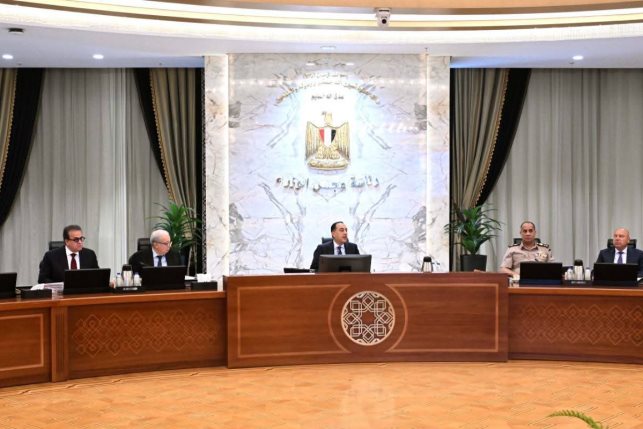
Speaking at a press roundtable in mid-September, Prime Minister Moustafa Madbouly emphasized that while revenues are showing some signs of stabilization, they remain well below historical norms. He noted that a full recovery is unlikely without an improvement in regional security conditions.