The event brought together leading Egyptian and Japanese companies to explore investment opportunities and expand collaboration across both markets.
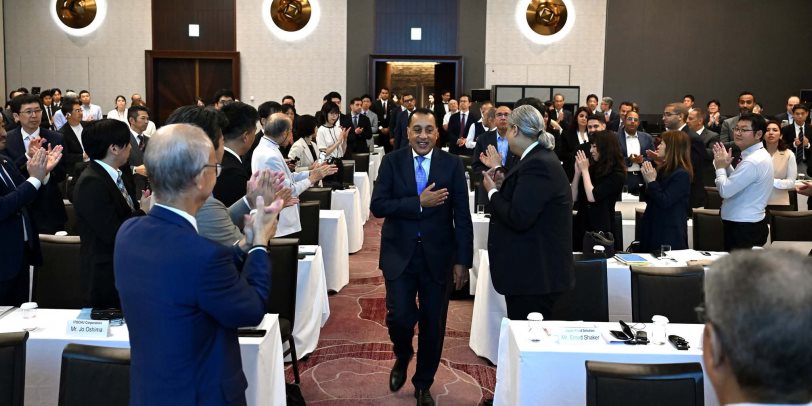
Egypt and Japan signed twelve agreements and letters of intent aimed at strengthening cooperation in diverse fields, during the Egypt–Japan Investment Forum.
The event brought together leading Egyptian and Japanese companies to explore investment opportunities and expand collaboration across both markets.
Several agreements focused on education. The Ministry of Education and Technical Education signed with the Tokyo Metropolitan Government to advance general and technical education, including vocational training, special needs education, and teacher development.
Another agreement was signed with Casio Middle East to enhance the skills of primary school math teachers by integrating calculator applications into curricula.
A third agreement with Sprix Japan will revamp math curricula for grades one to twelve in line with the Japanese system, while also introducing programming and IT courses and creating an academic performance tracking platform.
In addition, the ministry partnered with Yamaha Corporation to strengthen music education in one hundred schools, providing instruments and training teachers. A letter of intent was also concluded with Japan’s Ministry of Education, Culture, Sports, Science and Technology (MEXT) to further expand the “Tokkatsu” holistic education model and bolster vocational and technical learning.
Energy and green fuel featured prominently in the forum. The Suez Canal Economic Zone (SCZone) signed an agreement with Itochu Corporation of Japan and Egypt’s Orascom to design, develop, and operate green fuel bunkering facilities—specifically ammonia—for ships in SCZone ports.
Another agreement between the SCZone and the Tokyo Metropolitan Government will focus on cooperation in green hydrogen development.
Workforce development and industrial partnerships were also a major theme. The Tokyo Metropolitan Government signed an agreement with the Egypt–Japan Business Council to train and prepare Egyptian workers for the Japanese labor market.
El Araby Group entered into two separate partnerships: one with Toyota Tsusho to advance international research and development, technology transfer, and quality assurance; and another with Japan’s Kageto and Onkyo to manufacture and market visual devices under the Kageto brand using Onkyo Audio technology.
Tourism and hospitality saw new initiatives as well. Waterway Developments signed with Tokyo Hotels Group to provide advanced training for hospitality and tourism workers, aiming to elevate standards to world-class, sustainable levels.
Meanwhile, Titan Capital of Japan partnered with Egypt’s Promotors company to collaborate in leisure and tourism ventures.
Finally, Egypt’s Ministries of Industry and Investment signed an agreement with Toyota Tsusho to expand investment cooperation in the automotive sector, focusing on manufacturing vehicles and components locally to strengthen industrial capacity.
Complementing this, the Egypt–Japan University of Science and Technology (E-JUST) signed a letter of intent with Toyota Tsusho to support scholarship programs and foster academic exchange.
Together, these agreements mark a significant step forward in Egyptian–Japanese relations, underscoring both countries’ commitment to deepening ties in education, energy, technology, tourism, and industry.