Islamic Economy Summit opens in Istanbul with calls for a values-based global model and stronger Muslim world partnerships.
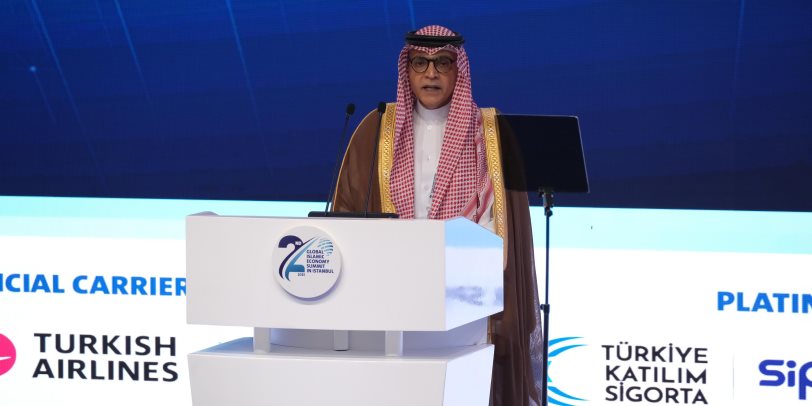 Abdullah Saleh Kamel speaks at the opening of the Global Islamic Economy Summit in Istanbul, calling for a value-driven global economic model.
The second edition of the Global Islamic Economy Summit officially opened in Istanbul this week, marking a major international gathering of economic thinkers, policymakers, industry pioneers, and institutional leaders from across the Muslim world and beyond.
The high-profile event, organized by the Al Baraka Forum for Islamic Economy, seeks to promote a values-driven approach to economic development and sustainable finance rooted in Islamic principles.
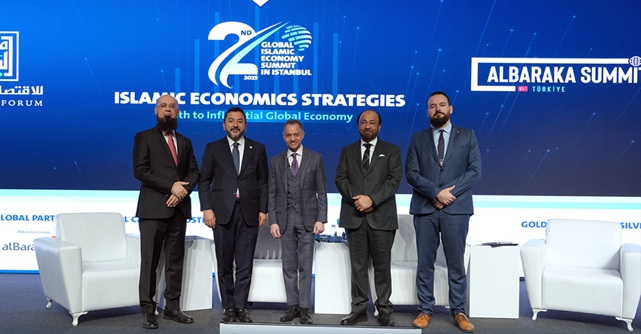
Institutional maturity and values-based reform position the Islamic world for global economic leadership
In a powerful keynote address during the summit’s opening session, Mr. Abdullah Saleh Kamel, Chairman of the Board of Trustees of the Al Baraka Forum, highlighted the significant developmental momentum currently witnessed across numerous Arab and Islamic capitals.
He emphasized that this forward-looking transformation is not coincidental but the result of deliberate institutional evolution and a deepening readiness among these societies to play an influential role in reimagining the global economic landscape.
According to Kamel, the Muslim world today possesses not only the ambition but also the institutional infrastructure and intellectual capital required to offer a competitive and ethically grounded economic model.
Financial instruments such as waqf, zakat, takaful, and sukuk prove viability in real-world applications
Underscoring the real-world efficacy of Islamic economic principles, Kamel stated unequivocally that the Islamic economy is far from being a mere theoretical construct. Rather, it is a time-tested, multidimensional financial system capable of offering robust alternatives to conventional models.
He pointed to the proven utility of mechanisms such as waqf (charitable endowments), zakat (obligatory almsgiving), takaful (Islamic mutual insurance), and sukuk (Islamic bonds)—tools that are already in practice across multiple sectors and have demonstrated their ability to mobilize resources, reduce inequality, and enhance social cohesion.
However, he also stressed the need for modern, well-governed regulatory frameworks that can facilitate the integration of these instruments into mainstream financial ecosystems on a global scale.
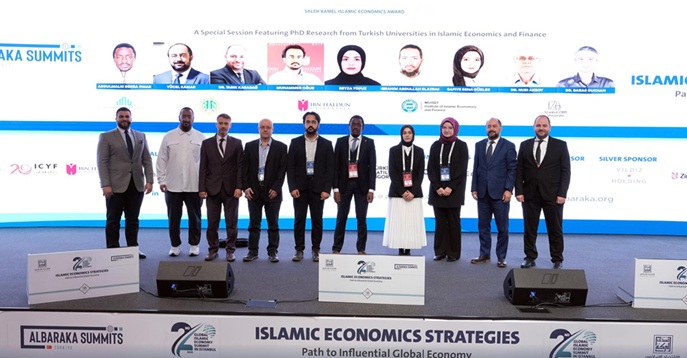
A call to unlock the potential of human talent, natural wealth, and intellectual capital
Kamel articulated a compelling vision for the future of the Islamic economy, asserting that the Muslim world is uniquely positioned to develop a dynamic and competitive economic paradigm grounded in its vast array of natural resources, rich demographic dividend, and enduring intellectual traditions.
He called upon governments, financial institutions, civil society actors, and academic communities to join forces in forming inclusive partnerships aimed at accelerating sustainable development.
By converting successful Islamic finance experiments into scalable models, he argued, these countries can create institutional ecosystems capable of addressing the pressing challenges of poverty, unemployment, and financial exclusion.
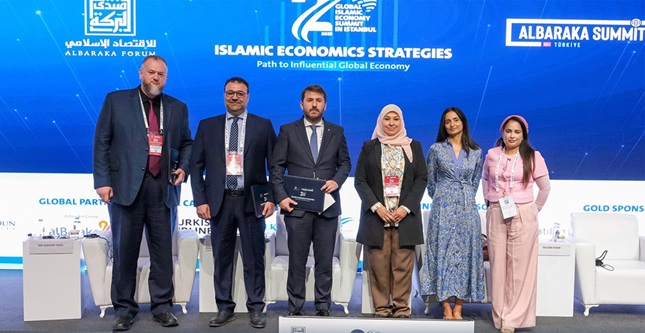
Strategic alignment with modern global demands without compromising ethical foundations
In a final appeal for long-term strategic thinking, Kamel underscored the importance of adopting a bold, yet values-centric approach to economic leadership. He urged Muslim-majority nations to drive a comprehensive and inclusive economic transformation—one that aligns closely with global standards and emerging trends while remaining deeply rooted in the moral and ethical framework of Islam.
According to Kamel, this balance between innovation and tradition is not only possible but essential if the Islamic world is to rise as a credible and influential player in shaping the future contours of the global economy.
From Medina to the world: A legacy of intellectual leadership since 1981
The summit is part of the wider intellectual and institutional mission of the Al Baraka Forum, a non-profit platform that has played a pioneering role in the development and promotion of Islamic economic thought since its first conference in Medina in 1981.
Over the decades, the Forum has succeeded in convening some of the most influential minds in the field, fostering dialogue, encouraging innovation, and enriching the body of academic and applied research in Islamic finance.
Its annual gatherings are widely recognized as vital platforms for discussing the future of ethical finance and inclusive economic development.
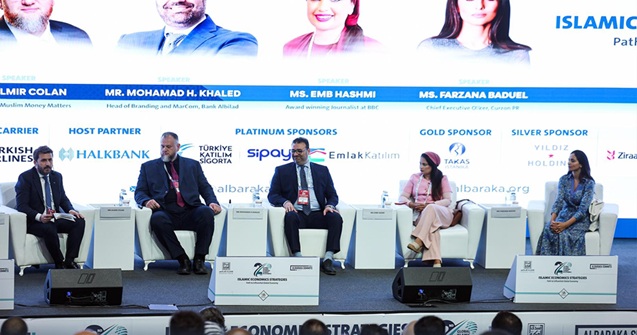
Exploring sustainable investment, market integration, and ethical financial inclusion
Throughout the summit’s sessions, participants are engaging in rich and strategic discussions on a wide range of issues facing Islamic finance in the modern era.
Key themes include enhancing economic integration among OIC countries, leveraging Islamic financial instruments to drive sustainable development, and addressing the regulatory, geopolitical, and technological challenges currently facing Islamic capital markets.
The summit also offers valuable opportunities for networking, collaboration, and the exchange of best practices among government officials, private sector leaders, multilateral institutions, and academic experts.