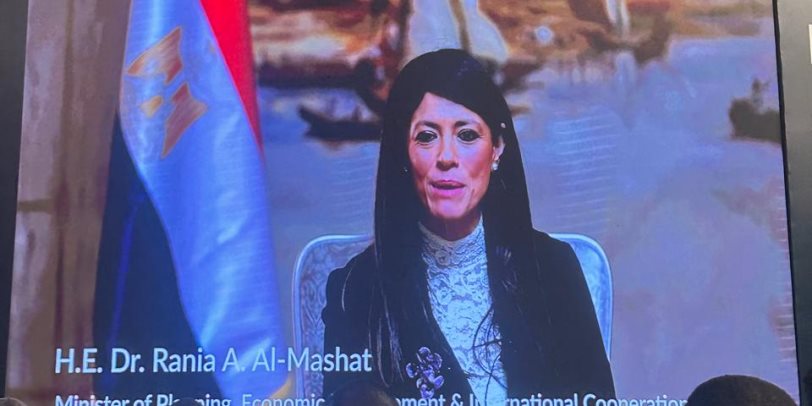
Minister of Planning, Economic Development, and International Cooperation, Rania Al-Mashat, outlined Egypt’s ambitious plans to boost investment and trade, both locally and across the continent.
She added during her speech at the opening session of the Focus Africa Trade and Investment Forum (FATIF) in Cairo that by 2030, Egypt aims to attract $60 billion in foreign direct investment (FDI) and increase its annual exports to $145 billion, leveraging its geographic position, expanding industrial base, and investor-focused reforms.
“Our goal is to create an enabling environment where private enterprise leads the way,” Al-Mashat said, highlighting that private sector investments now account for 63% of Egypt’s total investment landscape—a significant milestone in the country’s ongoing economic reform journey.
Al-Mashat stressed that Egypt’s development efforts are closely aligned with broader continental frameworks such as the African Continental Free Trade Area (AfCFTA) and the African Union’s Agenda 2063. However, she cautioned that intra-African trade remains far below its potential—currently just 15% of total African trade—and urged stronger collaboration to build infrastructure, expand digital trade solutions, and open regional value chains.
“Africa’s future lies in industrialization, innovation, and integration,” she said, adding that with a $3.1 trillion market and 1.4 billion people, AfCFTA is a powerful opportunity that African nations must fully embrace.
The Minister also introduced HAFIZ, a digital platform developed by her ministry to support small and medium-sized enterprises (SMEs). The platform connects users with over 90 advisory and financial services, regional and international tenders, and business development tools. “HAFIZ is about breaking down barriers—giving businesses the access they need to grow and scale across Africa,” she explained.
Al-Mashat praised the role of Afreximbank in advancing trade and industrial growth across the continent, particularly through its ongoing support for Egypt’s private sector and development priorities. She also spotlighted key national programs like the NWFE (Nexus of Water, Food, and Energy) initiative and the 2050 National Climate Change Strategy, which reflect Egypt’s drive to integrate sustainability into its long-term economic vision.
The Minister called for stronger South–South cooperation through shared ventures, infrastructure development, and knowledge transfer—tools she believes are essential to unlocking Africa’s collective potential. “The private sector already generates more than 90% of Africa’s jobs and 70% of its GDP. If we empower it further, there is no limit to what we can achieve together,” she said.
Held over two days in Cairo, FATIF 2025 has brought together African policymakers, diplomats, and business leaders to explore joint investment opportunities and accelerate implementation of the AfCFTA across the continent.