Kuwait-based Ali Alghanim & Sons Group is exploring opportunities for expansion in Egypt, including a potential plan to establish an insulin factory in collaboration with foreign partners.

Kuwait-based Ali Alghanim & Sons Group is exploring opportunities for expansion in Egypt, including a potential plan to establish an insulin factory in collaboration with foreign partners.
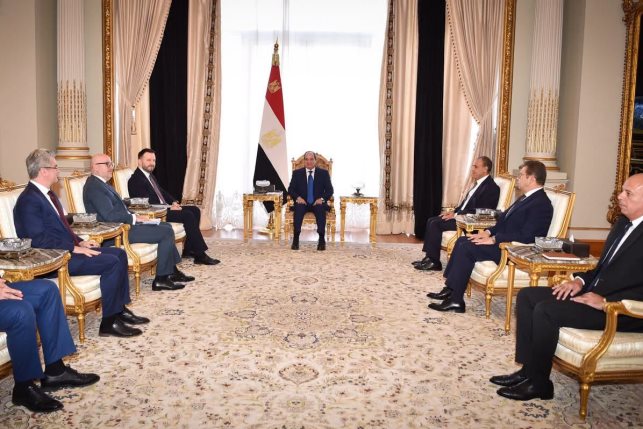
Company representatives met with the Minister of Investment and Foreign Trade Hassan El Khatib on Monday, reviewing the group’s current projects in Egypt, including the development of a tourist resort overlooking the Red Sea, as it looks to increase its footprint in the Egyptian market.
The group already has a presence in Egypt through its joint venture with Saudi Arabia’s Mohamed Yousuf Naghi Group and Egypt’s Organi Group. Together, they recently launched a $100 million auto assembly plant for Geely-branded vehicles, a significant step in Egypt’s automotive sector.
The local production of insulin is a new development in the Egyptian market, with Eva Pharma becoming the first company in Egypt to produce insulin glargine in late 2024, a milestone that will help the country transition from importing 6 million doses annually to exporting 74 million doses.
Egypt has faced ongoing challenges in the availability of medicines for several months, with a severe drug shortage that has particularly affected those with chronic illnesses.
In response to this crisis, the Egyptian government pledged EGP 7 billion in August 2024 to address the shortage of medicines and medical supplies.
A memo from the Pharmaceuticals Division of the Federation of Egyptian Industries last year revealed that more than 800 types of medicines were in short supply, including both chronic and non-chronic disease medications.
Additional reports indicated that shortages of active ingredients for drugs ranged from 15% to 20%, with generic versions of many medications being more readily available.
Despite these challenges, the drug shortage crisis in Egypt has largely been resolved, according to Ali Ghamrawy, Head of the Egyptian Drug Authority (EDA), who announced on February 3, 2025, that the shortage had been addressed by 98%.
Ghamrawy outlined plans to establish a six-month strategic stock of raw materials for high-demand medications, such as those for diabetes and blood pressure.
In his statement, Ghamrawy also touched on the issue of antibiotic misuse in Egypt, noting the need to reduce the unjustified use of antibiotics. As part of efforts to better manage antibiotic consumption, the government has implemented measures that resulted in a 3.5% reduction in the number of antibiotic packages circulating in the market, with 407 million packages recorded last year.
These measures are part of ongoing efforts to improve the availability and management of essential medicines in Egypt.
The country’s pharmaceutical sector plays a vital role in its economy, with local production from approximately 160 pharmaceutical factories meeting 91% to 94% of domestic demand.