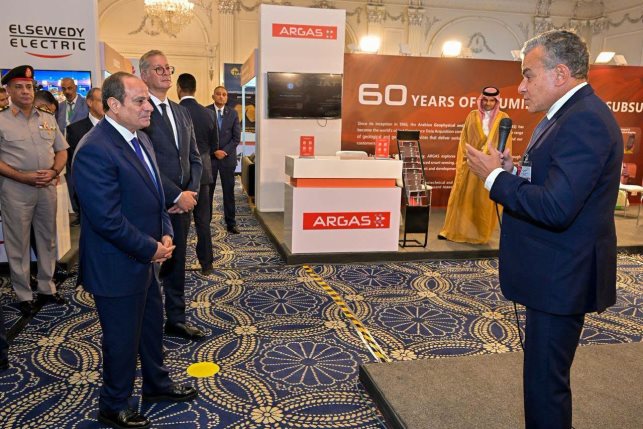
Madbouly praised the increase in remittances from Egyptians abroad, which was driven primarily by the implementation of a flexible exchange rate.
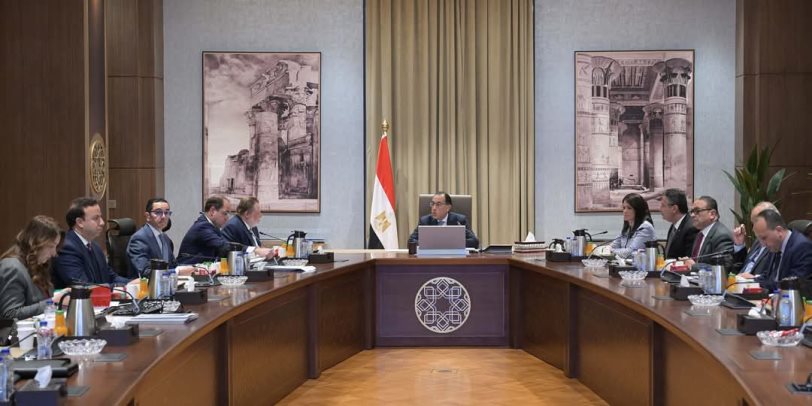
Prime Minister, Mostafa Madbouly, chaired a meeting of the Economic Ministerial Group, during which several important economic files were reviewed.
The Prime Minister affirmed the government’s ongoing efforts to enhance economic growth rates and create a strong, investment-attractive economy. He commended the substantial efforts of the economic ministers in this regard.
Madbouly praised the increase in remittances from Egyptians abroad, which was driven primarily by the implementation of a flexible exchange rate.
Cabinet spokesperson Mohamed El-Homsany stated that the meeting discussed the latest updates on the government’s economic reform program in collaboration with the International Monetary Fund (IMF).
Governor of the Central Bank of Egypt, Hassan Abdalla, and the Minister of Finance, Ahmed Kouchouk, presented updates on inflation trends, emphasizing the government’s continued collaboration with the Central Bank to implement measures aimed at reducing inflation rates in the coming period.
The spokesperson also noted that the meeting reviewed the trajectory of tax reforms. The IMF commended the recent tax relief measures introduced by the government, emphasizing their significance in facilitating the investment climate and expanding the tax base to generate additional revenue.
Discussions also addressed agreements with the IMF to increase social spending. It was noted that this increase would be directed toward programs such as Takaful and Karama,as well as the health and education sectors and other social protection programs across various budgetary categories.
The Minister of Investment and Foreign Trade presented a vision for doubling foreign direct investment (FDI) in line with Egypt’s Vision 2030 and the government’s work program.
Achieving these targets requires intensified efforts to create a competitive and attractive investment environment both regionally and internationally.
This includes ensuring macroeconomic policy stability and clarity, easing procedural and financial burdens on investors, adopting open trade policies to boost exports, and strengthening the role of the private sector while transitioning the state’s role to that of a regulator to ensure a fair investment environment.
El-Khatib highlighted measures taken to alleviate non-tax financial burdens on businesses and procedural burdens on investors, including unifying investor points of contact and establishing a single licensing platform.
The Minister also outlined the ministry’s vision for developing Egypt’s foreign trade system, targeting higher rankings in global trade indices and achieving a qualitative leap in exports.
Key strategies include simplifying procedures, reducing costs, launching a new export support program, deepening local manufacturing, and leveraging existing trade agreements to open new markets, particularly priority markets.
The time for customs clearance has been reduced from eight days to six days in the first phase. Customs services are now operational on public holidays and Fridays, and payment options have been extended to include post-bank hours and holidays in coordination with the Central Bank.
The Minister outlined plans for the second phase of customs clearance upgrades, which aim to further reduce clearance time to two days, detailing steps to achieve these objectives.
The Minister also presented a vision for regulating the automotive market by 2025.
This strategy aims to eliminate market distortions, promote fair competition among stakeholders (producers, distributors, and agents), and ensure the availability of vehicles that meet quality standards, with guaranteed after-sales services and genuine spare parts at fair prices for consumers.