These initiatives have already added 4.7 gigawatts of renewable energy capacity and are expected to reduce carbon dioxide emissions by approximately 17 million tons annually, while saving $1.2 billion each year in fuel costs previously allocated for thermal power plants.
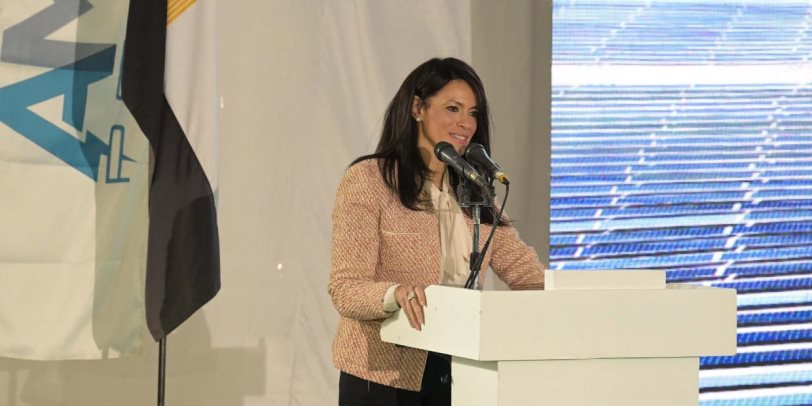
Egypt’s Minister of Planning, Economic Development, and International Cooperation, Rania Al-Mashat, highlighted the country’s efforts to transition to renewable energy, emphasizing the achievements of the National Platform for the NWFE Program. Al-Mashat noted that the program has mobilized over $4.5 billion in concessional financing for private sector-led renewable energy projects since 2022.
These initiatives have already added 4.7 gigawatts of renewable energy capacity and are expected to reduce carbon dioxide emissions by approximately 17 million tons annually, while saving $1.2 billion each year in fuel costs previously allocated for thermal power plants.
Al-Mashat made these remarks during the inauguration ceremony of the Abydos 1 Solar Power Plant in Aswan. The 560-megawatt plant, part of the energy pillar of the NWFE Program, represents another step forward in Egypt’s renewable energy strategy. The event was attended by Prime Minister Mostafa Madbouly, Minister of Electricity and Renewable Energy, Mahmoud Esmat, Minister of Petroleum and Mineral Resources, Karim Badr, Governor of Aswan, Ismail Kamal, and representatives of AMEA Power, a subsidiary of Al Nowais Group from the UAE.
The NWFE Program, launched in 2022, is a national initiative addressing climate change adaptation and mitigation while aligning with Egypt’s National Climate Change Strategy 2050. It aims to decommission 5 gigawatts of thermal power plants and stimulate $10 billion in investments to develop 10 gigawatts of renewable energy projects between 2023 and 2028. This strategy is a cornerstone of Egypt’s efforts to increase renewable energy’s share to 42% of the national energy mix by 2030, in line with its nationally determined contributions.
Al-Mashat praised the innovative blended financing mechanisms employed under the NWFE Program, which combine technical support, concessional funding, and international partnerships to advance Egypt’s green transition. She noted that these efforts leverage global alliances, such as the Glasgow Financial Alliance for Net Zero, to ensure maximum impact and participation from development partners.
The Abydos solar project exemplifies these achievements, representing a collaboration between AMEA Power and international financing partners, including the International Finance Corporation (IFC), the Japan International Cooperation Agency (JICA), and the Dutch Development Bank (FMO). The project not only adds to Egypt’s growing renewable energy capacity but also underscores foreign investors’ confidence in the country’s leadership in the Middle East’s green energy sector.
Al-Mashat attributed Egypt’s success in renewable energy to structural and legislative reforms since 2014, as well as investments in infrastructure that have positioned the country as a regional energy hub. These advancements have enabled Egypt to meet domestic energy needs and expand cross-border energy initiatives, including electricity exports to neighboring countries.
The NWFE Program has received significant international recognition, including commendation at COP29, where 12 multilateral development banks issued a joint statement praising its model for advancing green investment strategies. This program is seen as a template for national platforms that drive sustainable development and climate resilience.
The Abydos solar power plant, inaugurated as part of these efforts, marks a major milestone in Egypt’s renewable energy journey. It reflects two years of concerted efforts, starting with financial closure agreements signed in November 2022, and follows the announcement of the Amounet Wind Farm project in Ras Ghareb, Red Sea, which will add over 1 gigawatt of capacity with $1.1 billion in investments. These projects collectively highlight Egypt’s commitment to achieving a sustainable and greener energy future.