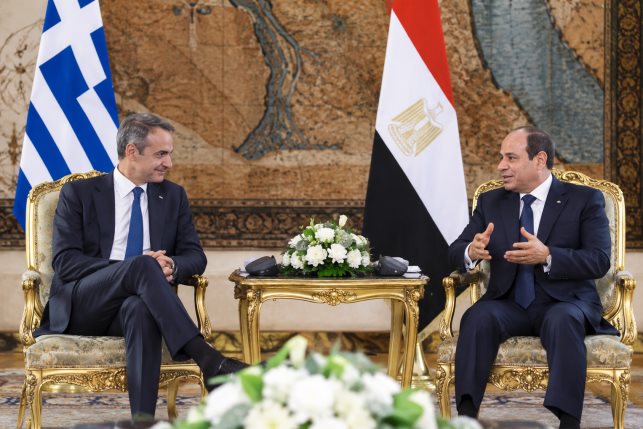
Egypt already has three active international bond programs listed on prominent global exchanges.


Egypt’s Ministry of Finance is currently evaluating the possibility of issuing international bonds during the first half of 2025, with the objective of raising over $2 billion. According to a government official, the final decision on the bond issuance will depend largely on the global interest rates, which are anticipated to decrease in the coming year.
International bonds are financial instruments that enable governments to borrow from global markets, with repayment due after a specific period and an interest rate set by the issuing authority. These bonds play a crucial role in diversifying funding sources and meeting the financial needs of the country’s treasury.
Egypt already has three active international bond programs listed on prominent global exchanges: $40 billion on the London Stock Exchange, $12 billion on the Irish Stock Exchange, and $30 billion on the Luxembourg Stock Exchange. The country’s total outstanding international bond debt amounts to $30.64 billion, including bonds worth $1.5 billion issued in June 2015, maturing in June 2025, and $750 million issued in October 2020, maturing in October 2025.
In addition to dollar-denominated bonds, Egypt has €4 billion in euro-denominated bonds, ¥60 billion in yen-denominated “Samurai” bonds issued in the Japanese market, and ¥3.5 billion in “Panda” bonds issued in China, maturing in October 2026.
The last major bond issuance by Egypt took place in September 2021, when it issued $3 billion worth of bonds, taking advantage of lower borrowing costs before the U.S. Federal Reserve began raising interest rates.
The government official noted that the final timing of the upcoming bond issue will be determined after approval from the Cabinet and consultations with investment banks selected to manage the process. These banks will advise on the optimal timing for entering the international markets.
As outlined in Egypt’s draft 2024-2025 state budget, the Ministry of Finance estimates a financing gap of approximately 2.84 trillion Egyptian pounds, compared to 2.14 trillion pounds in the previous fiscal year. To close this gap, Egypt plans to secure 58.8 billion pounds from the International Monetary Fund, issue international bonds worth 69.33 billion pounds, and obtain loans from international institutions amounting to 140.09 billion pounds.
Conclusion: The potential issuance of international bonds in 2025 represents a significant step in Egypt’s ongoing efforts to manage its fiscal challenges while maintaining access to international capital markets. With global interest rates expected to ease, the country is positioning itself to tap into favorable borrowing conditions that will support its development goals and economic stability.