
The Minister of Finance stated that the Egyptian economy has attracted significant foreign investments during the first half of the fiscal year.
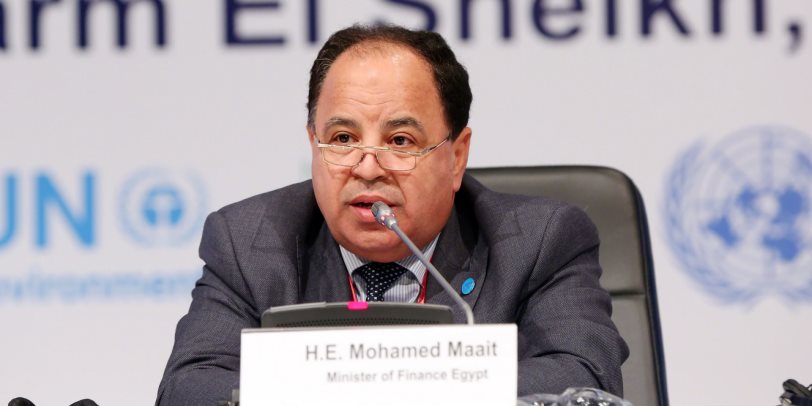 Dr. Mohamed Maait, the Minister of Finance - File Photo
Egypt’s credit rating was downgraded by Fitch Ratings, one of the three major credit rating agencies, from ‘B+’ to ‘B’ in both local and foreign currencies with a negative outlook. The decision reflects Fitch's view on Egypt's external financing needs amid unfavorable global market conditions for all emerging countries.
It also reflects the agency's estimates and analysis, which indicate that the Egyptian economy continues to face difficult external pressures due to the complex global challenges, including the negative fallout of the war in Europe, the global inflation wave, and the rise in interest and lending rates, as well as financing costs due to restrictive policies by central banks around the world.
These factors have led to a wave of capital outflows from emerging markets, including Egypt, in favor of advanced countries and markets. This coincides with the difficulty of accessing global markets, which suffer from the "uncertainty" among investors.
Dr. Mohamed Maait, the Minister of Finance, stated that the Egyptian economy has attracted significant foreign investments during the first half of the fiscal year, as well as financial resources from many international institutions, despite the severity of the global pressures and challenges.
He added that the Egyptian economy still has the ability to attract foreign inflows, and that the government's measures and reforms to enable local and foreign private sectors to participate in the economy will contribute to a speedy and sustainable return of the Egyptian economy to strong growth. He explained that the government's "government offerings program" within the framework of the national policy document opens up prospects for foreign investments, targeting $2 billion by the end of the current fiscal year.
The minister pointed out that the government is implementing a comprehensive package of reforms to enhance the safe economic path in the face of external shocks. There is also a package of financial, monetary, and structural measures to positively deal with the external financing needs of the country, in addition to full commitment to the IMF-supported economic reform program, which is the cornerstone of the country's economic reform path.
Positive Background News: Despite the recent downgrade by Fitch Ratings, other indicators suggest that the Egyptian economy is on track to a gradual recovery. According to the Central Bank of Egypt (CBE), the country's foreign reserves reached $40.3 billion at the end of April, the highest level ever recorded.
This reflects the success of the government's economic reform program in attracting foreign investment and improving the balance of payments, which are crucial factors for sustainable economic growth. Additionally, the recent discovery of natural gas in Egypt's West Delta area is expected to boost the country's energy sector and support the economy further.
The minister clarified that the credit rating agency "Fitch" highlighted in its recent report the continuation of achieving financial discipline, which was significantly reflected in the results of the previous fiscal year 2021/2022. The overall budget deficit rate decreased from 6.8% in 2020/2021 to 6.1% of GDP in June of last year, and the Ministry of Finance was able to record a preliminary surplus for the fifth consecutive year, amounting to 1.3% of GDP. The "Fitch" report indicated that the continuation of achieving financial discipline and achieving the new budget targets is due to strong growth in government revenues as a result of broad automation measures to improve tax administration and increase tax revenue, in addition to the government's efforts to rationalize spending and expand the social protection network. Fitch expects the average economic growth rate to reach 4% annually over the next three years.
The minister stated that they are committed to continuing financial discipline and achieving the financial targets for the year 2022/2023, despite the major and cumulative external shocks. They aim to achieve a preliminary surplus of 1.5% of GDP during the current fiscal year and 2.5% in the next fiscal year and subsequent years to reduce the debt-to-GDP ratio to less than 80% by the fiscal year 2026/2027.
He confirmed that Egypt’s commitment to maintaining a preliminary surplus was generally appreciated by all international institutions, including "Fitch," which referred to it, as well as increasing social spending in the general budget to partially mitigate the impact of the economic crisis on the first categories under care by increasing salaries and pensions significantly, and increasing transfers and allocations for the "Solidarity and Dignity" program.
Ahmed Kajok, Deputy Minister of Financial Policies and Institutional Development, said that the "Fitch" institution emphasized in its report the importance of the role and contribution of the private sector in economic activity, increasing its contribution to overall investments. In this context, we confirm that the issuance of the State's final policy document, which was approved by the political leadership, contributes to encouraging and attracting the private sector to increase its investments and presence in the Egyptian market, and to increase its contribution to strong economic growth in the coming period. The government is working to improve the business environment to attract more foreign investments.
He added that "Fitch" can improve Egypt's credit rating in the coming period if the country's resources of foreign exchange are increased, especially sustainable resources such as increasing the proceeds of commodity and service exports and foreign direct investments.
He pointed out that despite the compounded economic challenges and shocks, we seek to achieve the financial targets for the fiscal year 2022/2023, especially with the continuation of financial discipline efforts. The financial data for the period from July to March of the fiscal year 2022/2023 reflects a total budget deficit of about 546 billion pounds, or 5.6% of GDP, compared to 4.9% of GDP during the same period of the previous fiscal year, despite severe pressures and unfavorable global economic conditions.
The budget achieved an initial surplus of 50 billion pounds compared to 32 billion pounds during the same period of the previous year. The average annual growth rate of general budget expenditures was about 25.9%, while revenues achieved a growth rate of about 18.5%, driven by the strong and high annual growth rate of tax revenues, which reached 21.9%.