It is widely known worldwide that Egyptian cotton is the king of all cottons and although many have tried to imitate it.
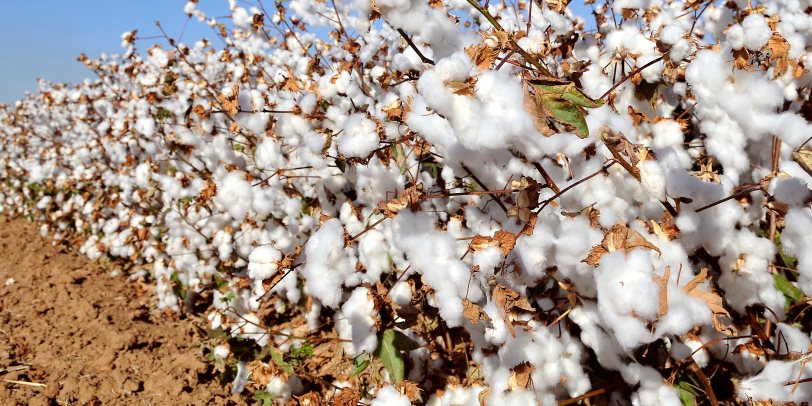 Experts stress the importance of returning fine Egyptian cotton yarns to the global markets - File Photo
Egyptian cotton industry expert Ashraf Badawi has emphasized the importance of overcoming the challenges facing fine cotton yarns made from Egyptian cotton and returning them to the global markets with merit.
It is widely known worldwide that Egyptian cotton is the king of all cottons and although many have tried to imitate it, the advantage of Egypt's soil and climate cannot be found anywhere else in the world.
Badawi added that Egyptian cotton is characterized by unique and rare properties such as the length and strength of its fibers, which give fabrics durability for long periods of up to decades, as well as its softness and sheen, which rival natural silk.

In addition, it is characterized by the presence of pores or ventilation and the absence of heat retention, which gives a comfortable and peaceful sleep, and most of it is used in home textiles.
It is also distinguished by not shrinking, changing dimensions, or losing thickness, and it is absorbent to water, which helps with the quality of dyeing and depth of colors, in addition to not being prone to fading or color changes when washed in water at a temperature of 40 degrees.
Regarding the mechanisms for returning to competition in the global markets, Engineer Ashraf Badawi pointed out that it is known that the more the number of threads per square inch in the sheets produced globally, the better the softness, texture, and durability.
The number of threads per square inch is referred to as the TC (Thread Count) and normal sheets have a TC of 180. Globally, competitors reach from TC200 to TC300, and the higher the TC, the higher the thread count.
He explained that "we are the only ones in the world using Egyptian cotton that can reach up to TC1500. So why don't we specialize in making fine threads from thread 100 to thread 250 to reach that point? The mistake we make is that we only use long-fiber threads like Giza 94 and do not use extra-long staple cotton like Giza 92 and Giza 96."
Extra Fine & Extra Long Staple Cotton (Giza 45, Giza 87 and Giza 93) represents about one percent of the total Egyptian Cotton annual production.
Giza cotton is actually a specific form of Egyptian cotton. Grown in close proximity to the Nile River, Giza cotton’s special characteristics are the result of this unique environment.
He explained that China, the United States, and others use extra-long staple cotton and do not use only long-fiber threads like Egypt, which gives them a competitive advantage in the market. In conclusion, Badawi stressed the need for Egypt to invest in producing high-quality cotton, spinning, weaving, and finishing to maintain its position as a global leader in the cotton industry.
In 2021, Egypt's cotton exports increased by 40% to reach $327 million, compared to $232 million in 2020.
This increase was due to the demand for high-quality Egyptian cotton, especially from China, Bangladesh, Turkey, and Italy, which are the largest importers of Egyptian cotton. The rise in cotton exports is a positive sign for the Egyptian economy and an opportunity for the country to regain its position in the global market.